Our team at Tucson Roof Gurus, led by Kevin Bayes, talks with homeowners every single week who are stuck on the exact same decision.
Choosing between standing seam vs corrugated metal roofing: which is right for your Tucson home? We see that a minor difference in fastener design becomes a major factor during monsoon season. This choice dictates how well your roof handles massive temperature swings.
The hard data reveals the true value of each system. We will break down the specific wind ratings, cost differences, and maintenance requirements for both options. Then, you can make a clear decision based on facts.
What Is Standing Seam Metal Roofing?
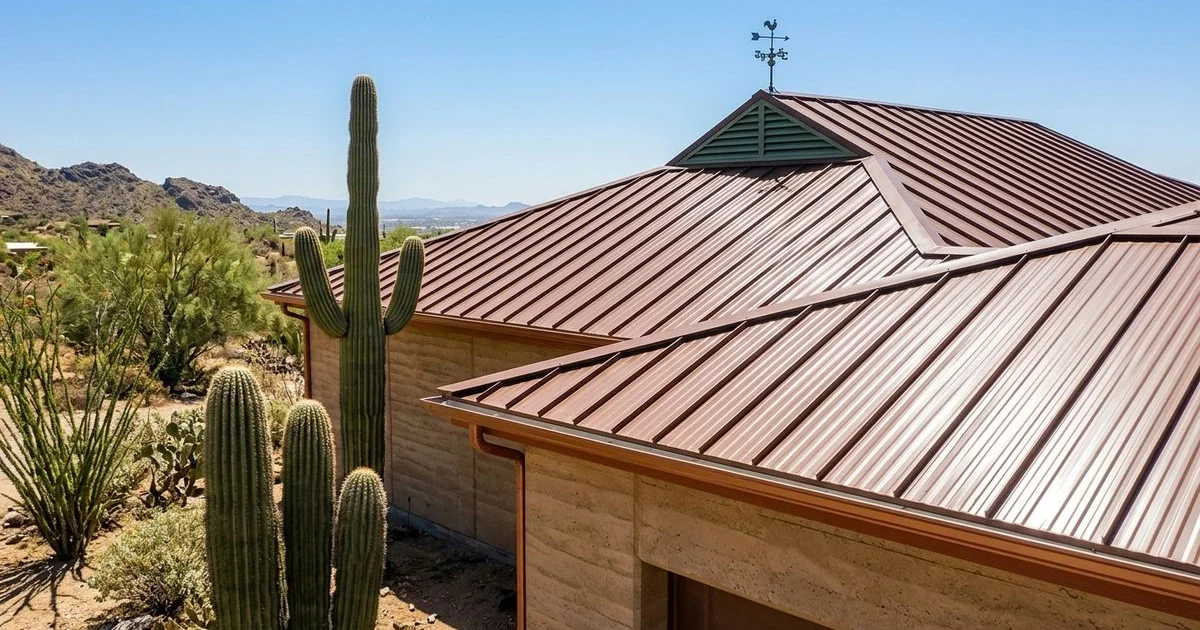
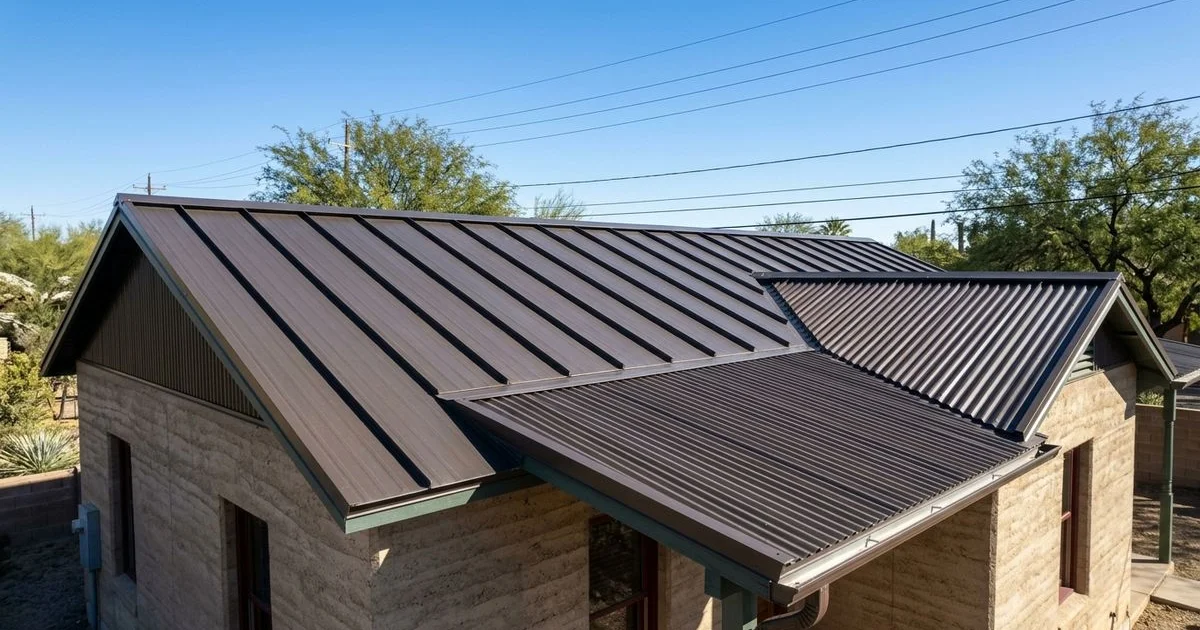
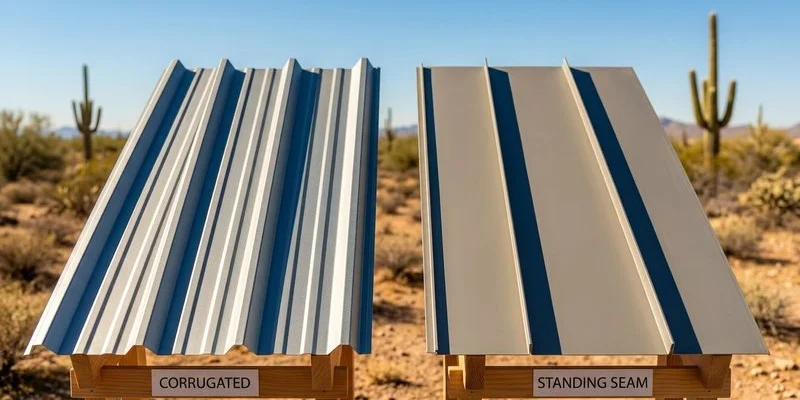
Standing seam metal roofing features long vertical panels that run from the ridge of your roof down to the eaves. Our crews typically install these systems utilizing thicker materials, usually 22 to 24-gauge steel or aluminum.
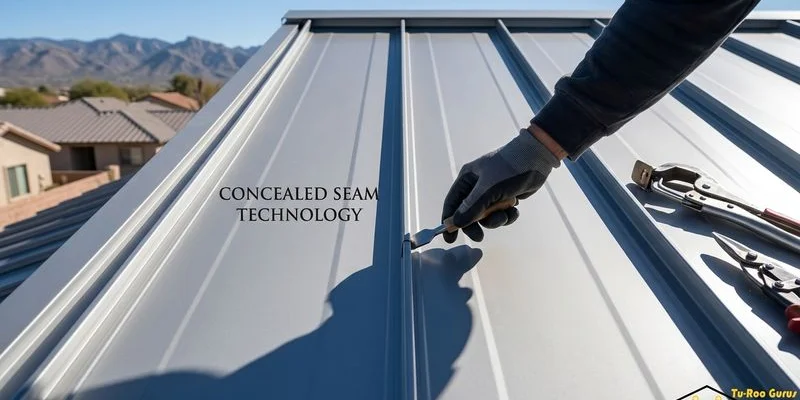
The panels connect through raised seams that interlock and stand upright, usually one to two inches above the flat surface of the panel. Fasteners remain completely concealed beneath these seams. Our teams value this specific design because it eliminates exposed screws or nails on the surface of your roof.
This concealed fastener system serves as the single biggest advantage of standing seam. Water simply cannot find a way through the barrier without any penetrations in the panel surface. We watch these floating panel systems expand and contract easily with Tucson’s 30-degree daily temperature shifts.
The core advantages of a standing seam system include:
- Concealed fasteners that eliminate leak points.
- Floating clip designs that prevent stress from thermal expansion.
- Thicker 22 to 24-gauge base materials for superior impact resistance.
Industry standards point to a Kynar 500 coating as the premier finish for this material. Our installers highly recommend this specific Polyvinylidene Fluoride (PVDF) paint formula to reflect UV rays and resist chalking. A Kynar finish often carries a 40-year warranty against fading. This resin system maintains a strict Delta 5 color rating, keeping your roof looking brand new despite the harsh Arizona sun.
What Is Corrugated Metal Roofing?
Corrugated metal roofing uses panels with a repeating wave or ribbed pattern, typically measuring 7/8 of an inch deep. Our installers secure these panels directly to the roof deck using exposed fasteners.
These specialized screws come equipped with EPDM rubber washers that create a seal at each penetration point. Most residential installations feature panels made from slightly thinner 26 to 29-gauge steel. We see this design hold up against severe Southwestern weather conditions for decades.
Corrugated panels cost significantly less to purchase and install. This lower price point makes them a popular choice for budget-conscious homeowners. Our clients get the core durability of metal without the premium price tag.
The exposed fastener design provides incredible value, but requires specific maintenance to maximize its lifespan in the desert.
Manufacturers usually coat these corrugated panels with an SMP (Silicone-Modified Polyester) paint finish, like the popular Valspar WeatherXL. This specific coating provides excellent resistance to scratching and weathering. We consistently see SMP finishes offer reliable performance with a standard 40-year film integrity warranty. While the paint protects the metal, it will fade slightly faster than the premium PVDF options.
Head-to-Head Comparison for Tucson Homes
Durability and Lifespan
Both standing seam and corrugated metal roofing outlast traditional asphalt shingles by a wide margin. Our data shows standing seam roofs boasting a proven lifespan of 50 to 75 years. Corrugated panels generally last 30 to 50 years under similar desert conditions. This significant gap largely comes down to the fastener system design.
We attribute much of this difference to the constant thermal shock caused by massive daily temperature swings. Metal panels expand and contract continuously under the hot sun. Standing seam panels accommodate this physical movement easily because they glide on hidden clips rather than being pinned down.
Our repair calls show that corrugated panels face a different reality. Because screws hold them tightly in place, decades of expansion can elongate the screw holes. This movement requires periodic re-fastening to prevent leaks. We remind homeowners that either metal option still represents a massive upgrade in longevity if you are planning a roof replacement for a worn-out shingle roof.
Cost Differences
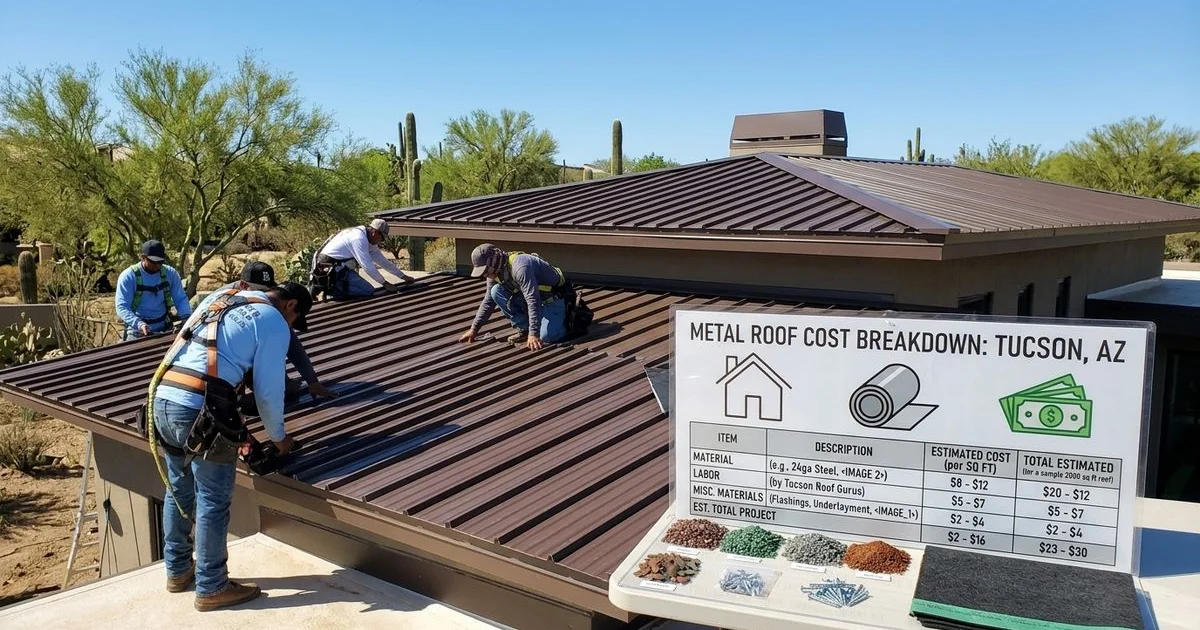
This category heavily influences the final decision for many property owners. Standing seam metal roofing commands a premium. Our 2026 pricing data places this system at $10 to $16 per square foot installed in the local area.
Corrugated metal provides a much more accessible entry point. These exposed-fastener roofs run $7 to $12 per square foot installed. We run the numbers on a standard 2,000-square-foot roof to make the comparison perfectly clear.
A standing seam system will total between $20,000 and $32,000. A corrugated metal roof drops that investment down to a range of $14,000 to $24,000. Our detailed guide offers a deeper breakdown of how much metal roofing costs in Tucson.
| Feature | Standing Seam | Corrugated Metal |
|---|---|---|
| Installed Cost (Per Sq. Ft.) | $10 to $16 | $7 to $12 |
| Total Cost (2,000 Sq. Ft.) | $20,000 to $32,000 | $14,000 to $24,000 |
| Expected Lifespan | 50 to 75 Years | 30 to 50 Years |
Energy Efficiency in the Desert
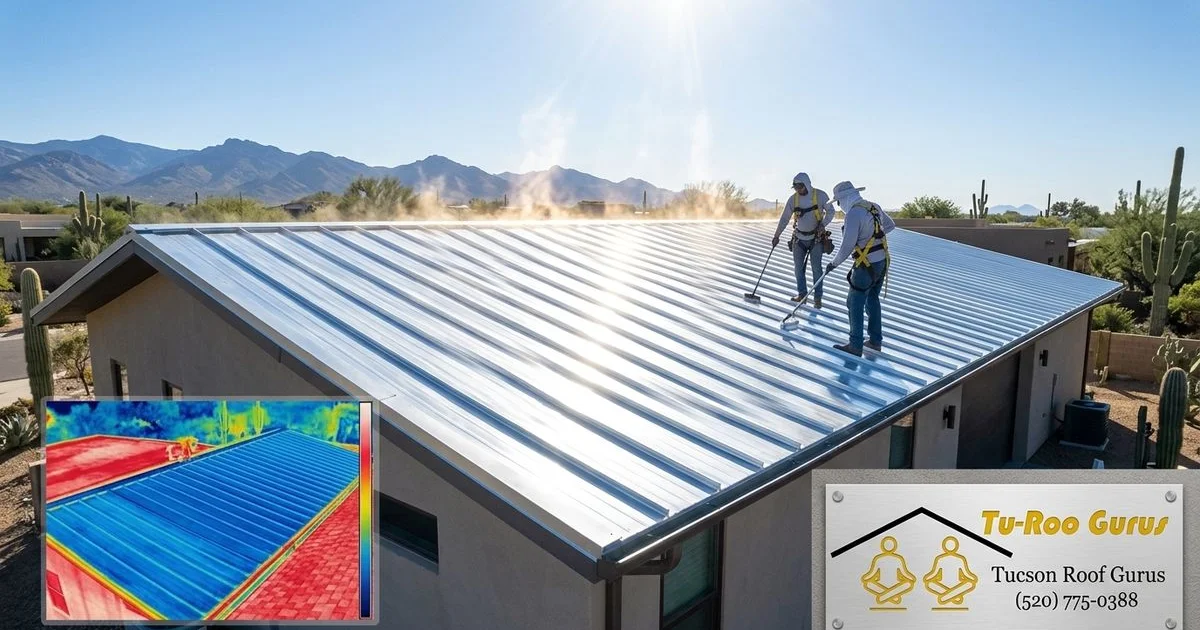
Both standing seam and corrugated metal roofing reflect 90 to 95 percent of solar radiation away from your home. We track how this reflectivity translates directly into serious savings when summer temperatures exceed 110 degrees. Homeowners who switch from shingles to metal roofing commonly report cooling cost reductions of 10 to 25 percent.
Standing seam panels hold a slight edge in thermal performance. Our technicians observe that their concealed fastener system creates a tighter seal, reducing hot outdoor air infiltrating your attic assembly. Both profiles qualify as cool roofs when coated with reflective finishes. Local incentive programs make upgrading your home envelope highly attractive. We always help our customers take advantage of available rebates to offset their initial costs.
Popular energy efficiency programs for metal roof upgrades include:
- TEP Rebates: Up to $800 from Tucson Electric Power when upgrading your attic insulation to R-38 alongside your roof installation.
- Federal 25C Tax Credit: Up to $2,000 in savings for qualifying home envelope and HVAC improvements.
- Cool Roof Ratings: Potential reductions in homeowners insurance premiums for fire-resistant materials.
Proper ventilation pairs perfectly with these reflective surfaces to lower attic temperatures. Our article on whether a metal roof makes your house hotter provides more specific data on desert heat management.
Wind and Storm Resistance
Tucson’s summer monsoon season brings sudden, destructive microbursts with wind gusts frequently exceeding 60 miles per hour. We find that standing seam roofing handles these high-wind events exceptionally well. The structural interlocking seams mean panels will not peel or lift under severe pressure.
Most standing seam systems carry Miami-Dade County approvals or equivalent ratings to withstand winds up to 140 miles per hour. Our crews respect the fact that corrugated panels also perform admirably in storms. Standard corrugated systems typically carry wind ratings between 90 and 120 miles per hour. The exposed fasteners on these panels present potential weak points over time. We warn homeowners that wind-driven rain can exploit a tiny gap if a screw loosens or a washer deteriorates.
Watch for these specific storm damage indicators:
- Elongated screw holes in corrugated panels.
- Cracked or missing EPDM rubber washers.
- Bent panel edges along the eaves or ridge cap.
Taking proactive steps prevents minor issues from becoming major leaks. Our team advises property owners to always prepare their roof before monsoon season regardless of the material.
Aesthetics and Curb Appeal
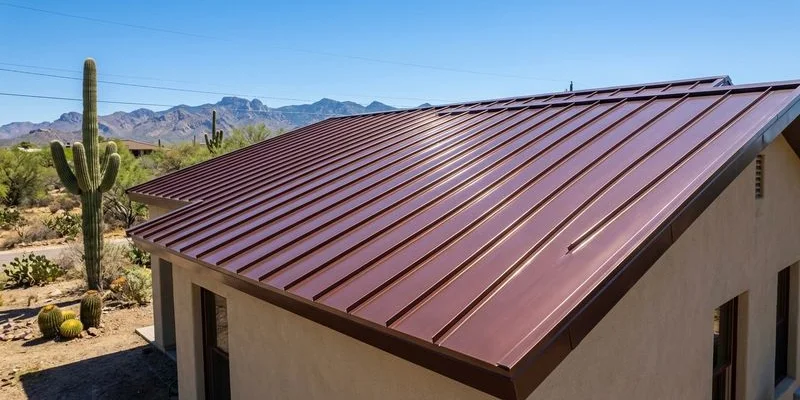
Standing seam roofing delivers a clean, modern aesthetic with smooth lines and zero visible hardware. We install this profile frequently on contemporary Southwestern homes and properties featuring sharp geometric architecture. The premium Kynar 500 coating ensures the bold colors stay vibrant for decades.
Corrugated metal brings a highly sought-after rustic texture. Our design team works with many residents who love the classic ranch-style appearance it provides. This wavy profile pairs beautifully with adobe, stucco, and traditional desert home styles.
Choosing the right color plays a massive role in long-term satisfaction. We recommend lighter earth tones for corrugated panels coated in SMP finishes. These lighter shades hide the slight fading that occurs faster than a premium Kynar finish.
Maintenance Requirements
Standing seam roofing requires virtually zero maintenance over its lifespan. We love installing this system because there are no delicate rubber components baking in the sun. An annual visual inspection and occasional clearing of roof debris is typically all the system demands.
Corrugated metal roofing requires a bit more proactive care. Our service records show that the exposed screws rely heavily on their EPDM rubber washers to keep water out. Those washers inevitably dry out and crack after 10 to 15 years in an intense UV environment.
A strict maintenance protocol for exposed fastener roofs includes three simple steps:
- Checking the tightness of all exposed screws every 10 years.
- Replacing any washers that show signs of cracking or UV degradation.
- Inspecting the sealant around flashing and roof penetrations.
Installation Considerations
Standing seam panels demand complex installation techniques. Our specialists utilize portable mechanical seamers that fold and lock the panels directly on the roof deck. This precise training and specialized equipment serve as major factors driving the higher upfront cost.
A standing seam project typically requires a longer timeline to complete properly. We guarantee a completely watertight, impenetrable barrier when the system is executed by experienced metal roofing professionals.
Corrugated panels offer a much more straightforward installation process. This simplicity keeps labor costs manageable and project turnaround times short. Our foremen enforce strict quality control because proper installation techniques still dictate the roof’s success. Incorrect screw placement or inadequate flashing details around chimneys easily cause catastrophic leaks that ruin the entire system.
Standing Seam vs Corrugated Metal Roofing: Which Is Right for Your Tucson Home?
Making the final call comes down to balancing your budget with your long-term goals. Our team offers this specific guidance after 25 years of installing both systems across Tucson.
Choose standing seam if:
- You want a proven 50 to 75-year lifespan with zero fastener maintenance.
- Your budget easily accommodates a $20,000 to $32,000 investment for a standard home.
- You live in an open desert area prone to 60+ mph monsoon wind gusts.
- Your home has a modern architectural design that benefits from clean lines.
- You want the superior 40-year fade resistance of a Kynar 500 paint finish.
Choose corrugated metal if:
- You want the 30 to 50-year durability of metal at a lower price point.
- Your property has a rustic, ranch, or traditional Southwestern aesthetic.
- You are perfectly comfortable replacing rubber washers every 10 to 15 years.
- You want to avoid the short lifespan of asphalt shingles on a tighter budget.
Get a Free Metal Roofing Consultation
Every single roof presents unique challenges.
Our team knows that the correct choice depends entirely on your property’s structure, wind exposure, and long-term financial plans. A thorough property walk-through provides the exact data needed for an honest recommendation.
When considering standing seam vs corrugated metal roofing, deciding which is right for your Tucson home ensures a smart investment. We encourage you to contact us for a free estimate if you are ready to explore metal options for your home. Schedule your free inspection today to lock in your 2026 installation date.

Kevin Bayes
Owner, Tucson Roof Gurus
Kevin Bayes has spent over 25 years installing and repairing roofs across southern Arizona. He founded Tucson Roof Gurus to bring honest, owner-operated roofing services to the community.
Free Roofing Estimate
Need help with your roof? Call us for a no-obligation estimate.
(520) 775-0388