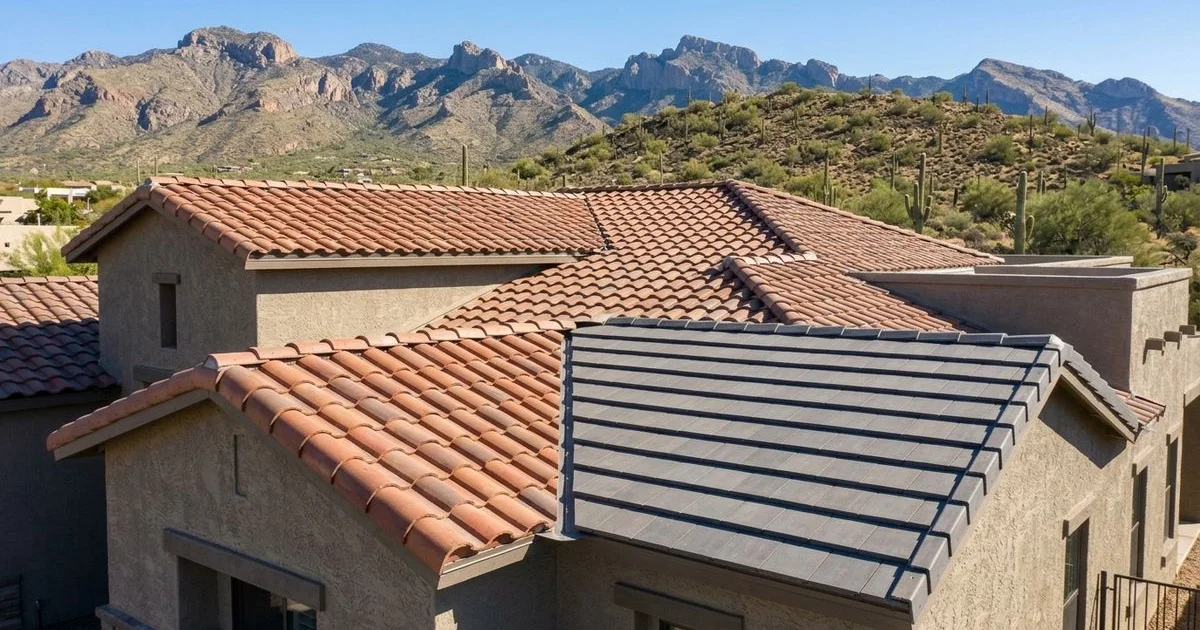
We often find Tucson homeowners completely shocked when they learn the truth about their roofs. The beautiful clay or concrete tiles are not actually what keeps the rain out of a living room. Those tiles simply act as a formidable first line of defense against the relentless desert sun.
Our team at Tucson Roof Gurus, owned by Kevin Bayes, has inspected hundreds of local properties and seen the results of this misunderstanding.
The real waterproofing layer, known as the underlayment, sits completely hidden below the surface.
When that hidden barrier fails, water can easily ruin your ceiling. We will walk through the data, explain exactly what causes this breakdown, and share the 5 signs your tile roof underlayment is failing (even if the tiles look fine).
If you are dealing with active water infiltration right now, check out this helpful resource on what to do when you discover a roof leak.
Why Underlayment Fails in Tucson
Before looking for signs of trouble, it helps to understand exactly what causes this material to break down. Our local climate acts as an extreme stress test for roofing materials.
National Weather Service data reveals Tucson experienced a staggering 112 days over 100 degrees in 2024. Summer surface temperatures on a Tucson tile roof frequently exceed 160 degrees during those peak months. We know that traditional felt underlayment simply cannot handle that sustained heat forever.
The high temperatures bake the volatile organic compounds out of the asphalt. This chemical change dries out the organic fibers, making the felt incredibly brittle and prone to cracking.
Our repair crews highly recommend upgrading to premium modern synthetics like Owens Corning Titanium UDL50. These newer materials offer superior tear strength and remain stable under heavy concrete tiles. Here is a quick look at how the two materials compare in a desert environment:
| Material Type | Typical Lifespan | Heat Resistance |
|---|---|---|
| Traditional Asphalt Felt | 15 to 20 years | Degrades rapidly above 140 degrees |
| Modern Synthetic Polymer | 25 to 50 years | Remains stable over 160 degrees |
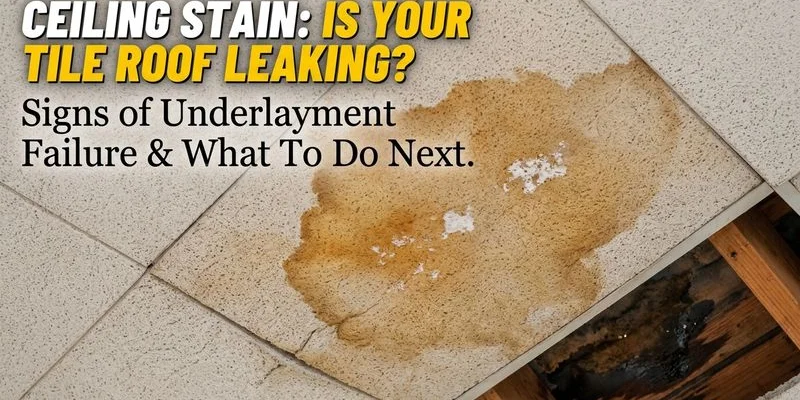
Sign 1: Water Stains on Ceilings or Walls
This is the most obvious red flag you can find inside your house. Our teams typically see these brown or yellowish stains appear right after the intense monsoon storms hit in July and August.
A single severe microburst can drop over an inch of rain in minutes. This rapid deluge completely overwhelms a brittle, cracked underlayment. We strongly advise taking action the moment you notice a stain darkening after a rainstorm.
Delaying repairs often turns a simple roof fix into a major interior renovation project.
Recent 2026 construction estimates show that professional drywall ceiling water damage repair in Tucson averages between $350 and $1,500 per room. Our experience shows that this price rarely includes fixing the roof itself or replacing wet fiberglass insulation.
Sign 2: Musty Smell in the Attic
A damp, moldy smell in your attic space serves as a major warning indicator. We understand that Tucson’s incredibly dry desert air usually prevents widespread mold issues.
Smelling something musty up there points directly to a specific moisture intrusion. Mold strains like Aspergillus require humidity levels above 60 percent to thrive. Our local monsoon season easily pushes attic humidity past that threshold.
The dry air will often evaporate the surface moisture before it causes visible dripping. This evaporation cycle allows the hidden rotting process to persist unnoticed for years. We recommend checking your attic closely the morning after a heavy rainstorm.
Look out for these specific early warning signs of hidden moisture:
- Dark, damp spots on the underside of the oriented strand board (OSB) or plywood.
- Discolored or compacted fiberglass insulation.
- A strong scent of volatile organic compounds, which create that classic musty odor.
- Rusty nails protruding through the roof deck.
Sign 3: Debris or Granules Beneath Tile Edges
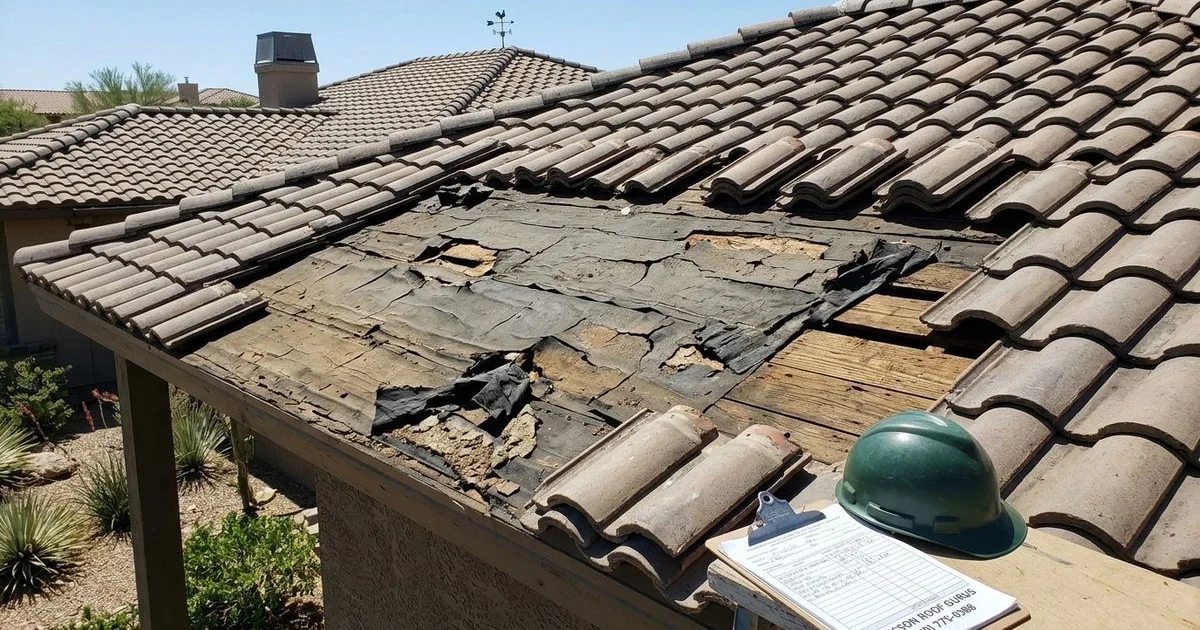
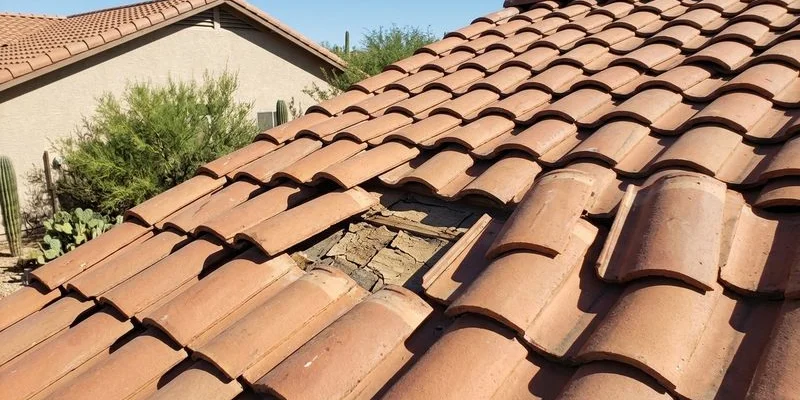
Old asphalt felt literally crumbles into dark, granular pieces as it degrades. Our technicians frequently discover this dark, crumbly material washing out from the bottom edges of tile rows.
It often accumulates in your gutters, looking strikingly similar to used coffee grounds. This debris is entirely different from the occasional clay or concrete chip that might break off the tiles themselves. We view this crumbly black residue as definitive proof that the tar paper has completely disintegrated.
The average cost for a professional gutter cleaning in Tucson runs between $150 and $250. Paying for that simple service can actually save you thousands by revealing this early warning sign. Our experts suggest taking a close look at the runoff water next time you clean your gutters.
Pay special attention to these specific areas for debris:
- The bottom of your downspouts after a heavy storm.
- The corners of your gutters where water pools.
- The splash blocks directly beneath your roof line.
Sign 4: Tiles That Have Shifted or Lifted
Tiles require a perfectly smooth, flat surface to sit correctly on the roof deck. Our inspectors often see gaps develop between tiles when the felt dries out and warps.
This warping creates bumps that push the heavy concrete or clay tiles out of alignment. The wooden battens holding the tiles can also rot if the waterproof barrier underneath them fails.
We know that the National Weather Service frequently records monsoon microburst wind gusts exceeding 70 miles per hour in Tucson.
These intense winds will easily catch lifted edges and rip the tiles completely off the roof. If you can see uneven tiles from the ground, schedule a professional evaluation immediately. Our crews warn against trying to walk on a tile roof yourself, as it is incredibly risky.
You can easily crack the fragile tiles under your weight and cause more damage than you originally found.
Sign 5: Your Tile Roof Is Over 20 Years Old
This specific marker functions more as a strict timeline than a visual symptom. Our records indicate that a massive portion of Tucson’s housing inventory was built during the 1990s housing boom.
Neighborhoods like the early developments in Rita Ranch are prime examples of this aging infrastructure. The concrete tiles on these 30-year-old homes usually look absolutely fantastic today. We regularly find that the original tar paper underneath has spent three decades baking in the sun and is almost certainly compromised.
The Value of a Lift and Relay
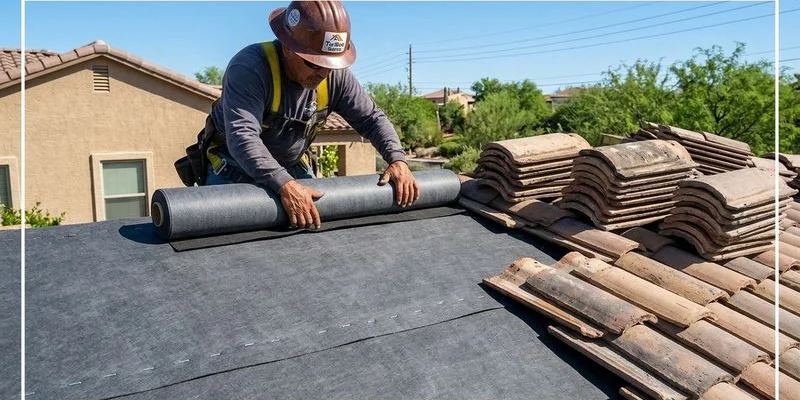
Replacing this barrier does not mean buying a brand-new roof. In most cases, a roofing team can carefully remove the existing tiles and install a new synthetic polymer sheet. Our specialists will then safely reinstall those exact same outer shells.
The outer shells are designed to last 50 to 100 years, offering plenty of remaining value. For a detailed look at expected timelines, see our article on how long tile roofs last in Tucson.
What Happens If You Ignore Failing Underlayment?
Ignoring this specific failure leads directly to progressively worse structural damage. Our roof repair teams have seen minor leaks quickly escalate into complete roof deck replacements.
Water infiltration behaves like a slow-moving disease for your house framing. Here is a breakdown of how the damage typically progresses:
- Stage 1: Moisture seeps through cracks in the tar paper and contacts the roof deck.
- Stage 2: Repeated moisture contact causes the roof deck plywood or OSB to soften, delaminate, or develop rot.
- Stage 3: Water penetrates the roof deck and enters the attic space, ruining the insulation.
- Stage 4: Structural damage spreads to the rafters and ceiling joists, making drywall damage visible.
Catching the problem at Stage 1 or 2 means replacing the barrier and possibly a few sheets of wood. We have seen the final bill jump from $5,000 to well over $20,000 simply due to delayed action.
Waiting forces you to deal with structural repairs, mold remediation, and extensive interior restoration. For realistic 2026 pricing expectations, read our complete guide on tile roof repair costs in Tucson.
How Underlayment Replacement Works
The restoration process, commonly known as a “lift and relay,” is straightforward but highly labor-intensive. Our crews follow a strict protocol to ensure your home remains protected throughout the entire job.
Reusing your existing materials saves a massive percentage of the total project cost. The process generally unfolds in five distinct phases.
- The team carefully removes the tiles section by section, numbering and organizing them for precise reinstallation.
- Workers strip away the old, crumbled felt and inspect the bare wooden roof deck for any rot or warping.
- Damaged deck sections get replaced with fresh, sturdy plywood or oriented strand board.
- A new high-temperature synthetic polymer underlayment goes down, providing superior resistance against the extreme Tucson heat.
- The original tiles are securely fastened back into place, with any previously broken pieces swapped out for matching new ones.
This entire project typically takes three to five days for a standard Tucson residence. We adjust this timeline based heavily on the roof size, pitch, and weather conditions.
Schedule a Tile Roof Inspection
If your home is showing any of these warning signs, or if your roof is simply older than 20 years, it is time for a professional evaluation. Our specialists at Tucson Roof Gurus handle everything related to tile roof inspection and repair.
Catching these issues early prevents small leaks from turning into massive structural disasters.
We will safely lift tiles in key drainage areas, assess the true condition of your waterproofing layer, and provide a clear, honest report.
Do not wait until expensive water stains appear above your living room sofa.
Contact us today to schedule a free inspection and stop these hidden problems before the next major monsoon storm hits.

Kevin Bayes
Owner, Tucson Roof Gurus
Kevin Bayes has spent over 25 years installing and repairing roofs across southern Arizona. He founded Tucson Roof Gurus to bring honest, owner-operated roofing services to the community.
Free Roofing Estimate
Need help with your roof? Call us for a no-obligation estimate.
(520) 775-0388