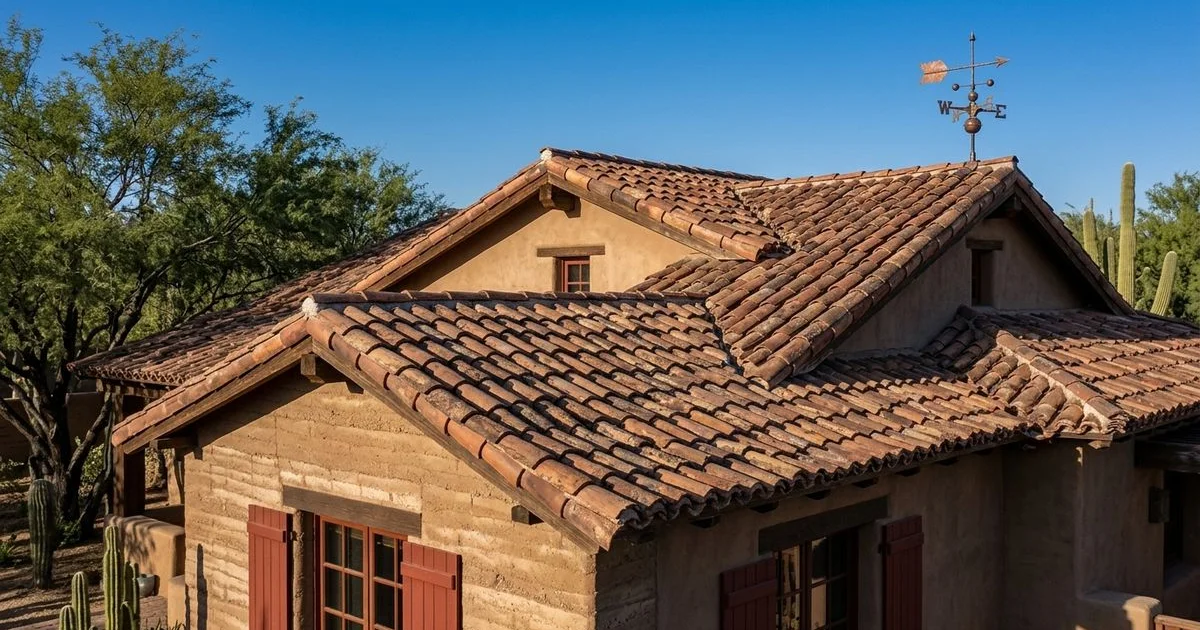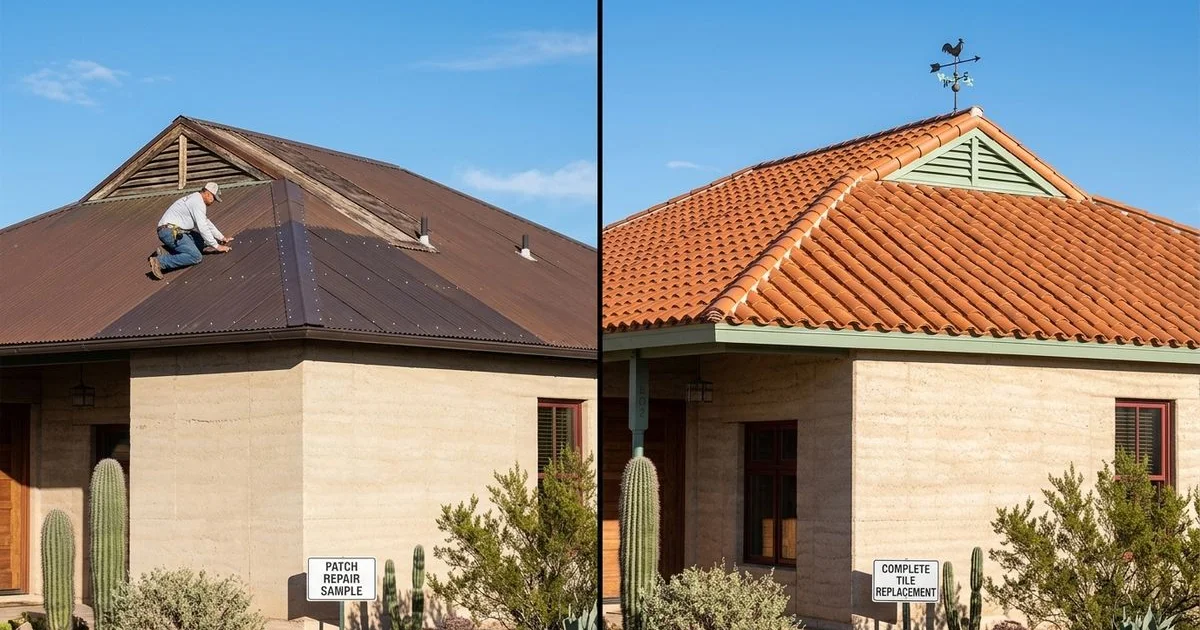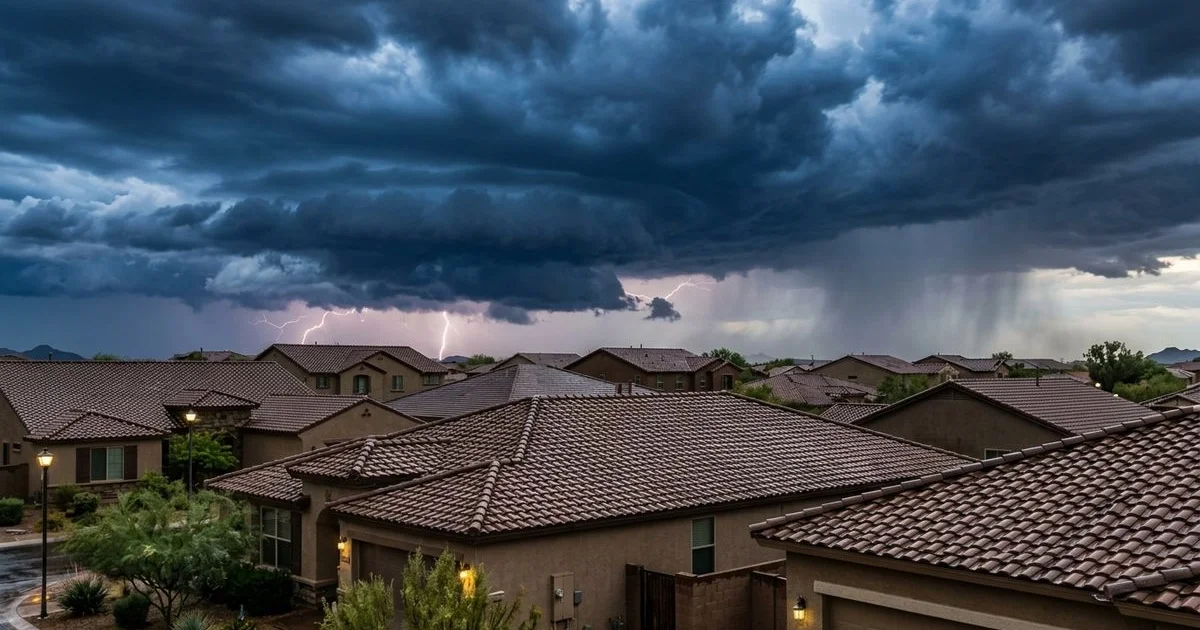
You know the familiar rhythm if you have spent a few summers in Southern Arizona. The dry heat dominates until late June, and then the sky suddenly transforms into a violent weather system within 30 minutes.
We see the exact same pattern every year as homeowners scramble to address sudden leaks. Watching a storm roll in over the Catalina Mountains is much less stressful when you know your property is completely secure.
Our team at Tucson Roof Gurus, led by Kevin Bayes, has spent the last 25 years studying exactly how these 60-mile-per-hour gusts and torrential downpours exploit minor structural weaknesses.
The difference between a dry ceiling and a flooded living room always comes down to proactive maintenance. Let’s break down the exact vulnerabilities the desert climate creates and walk through a practical roadmap for securing your property this season.
Figuring out How to Prepare Your Roof for Tucson requires catching the small issues before July arrives.
How to Prepare Your Roof for Tucson: Start With a Visual Inspection
We always tell clients to begin their preparation work safely from the driveway. Climbing a ladder without proper fall protection is simply too dangerous for a basic assessment.
Our technicians highly recommend using a pair of 8x magnification binoculars, like a standard Nikon ProStaff, to scan the second-story peaks clearly. Tucson experiences an extreme UV Index of 10 or higher for over 100 days each year, and this relentless solar radiation bakes flat roofing materials, creating a distinctive “alligatoring” pattern of deep, rigid cracks across the surface.
We also look closely for the hidden damage caused by our daily 40-degree temperature swings. The rapid expansion and contraction loosen mechanical fasteners and shatter rigid clay tiles.
What to look for from the ground:
- Shifted, cracked, or completely missing tiles
- Sun-baked, alligatored surfaces on flat sections
- Heavy debris accumulation in drainage valleys
- Gaps where roofing materials meet vertical walls
- Deteriorated sealants around HVAC equipment
Our crews suggest addressing these specific vulnerabilities immediately. A hairline fracture sitting harmlessly in May quickly becomes a massive water entry point during a July microburst.
Clean Your Gutters and Downspouts
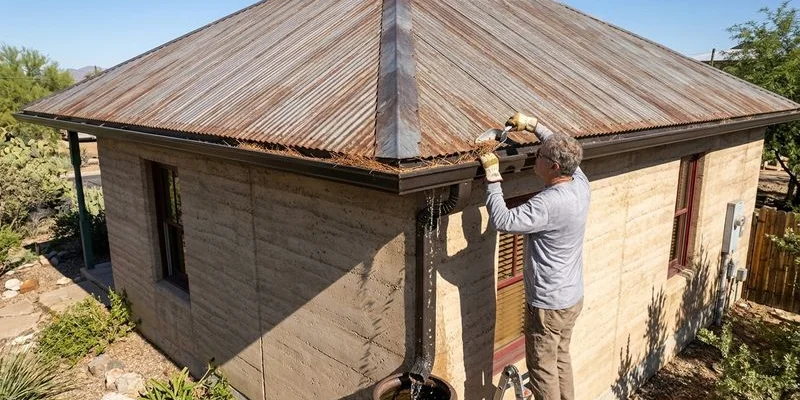
We constantly remind property owners about the sheer volume of water a desert monsoon delivers in a short window. A single inch of rainfall on a standard 2,000-square-foot structure dumps approximately 1,250 gallons of water directly into your gutter system.
Our roof repair crews frequently handle the expensive fascia rot and foundation damage that occurs when these channels clog. Backed-up water quickly overflows the edges and runs straight down your exterior stucco walls.
We suggest completely clearing all troughs and downspouts by the first week of June.
Pro Tip: Ensure your downspout extensions direct the heavy runoff a minimum of three to five feet away from your foundation slab to prevent soil erosion.
Installing surgical-grade stainless steel micro-mesh gutter guards, such as those from Gutterglove, is a smart upgrade if your lot has mature vegetation. These advanced guards specifically block the tiny leaves and dense seed pods dropped by local Chilean Mesquites, while still processing up to 150 inches of hourly rainfall.
You should run water through the entire system with a garden hose after finishing the cleanup.
We use this simple test to confirm everything flows freely to the designated drainage areas.
Trim Overhanging Branches
We handle dozens of emergency dispatch calls every summer specifically for tree-related structural impacts. Native desert species like the Palo Verde grow rapidly and possess brittle wood that easily snaps during 60-mile-per-hour microbursts.
Our post-storm inspections routinely reveal shattered concrete tiles caused by these falling limbs. Large overhanging branches also dump massive amounts of organic debris directly into your critical drainage pathways.
We advise maintaining a strict clearance zone of at least six to ten feet between any vegetation and your roofline.
Key tree maintenance steps:
- Identify and remove dead or dying limbs immediately.
- Trim branches that rub against shingles during breezy days.
- Clear low-hanging growth over driveways to allow service vehicles access.
- Rake up dropped seed pods before they blow into drainage paths.
Hiring an ISA Certified Arborist is a smart move for any large shade trees near the structure. These trained professionals scientifically evaluate the structural integrity of the trunk and root system long before the high winds arrive.
Inspect and Secure Flashing
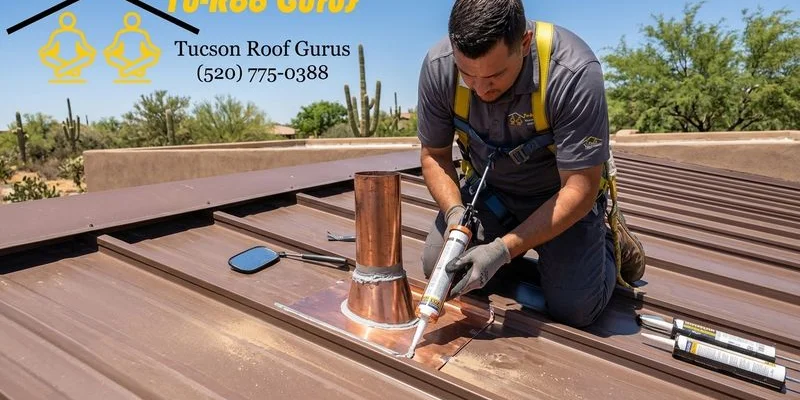
We consider metal flashing the absolute most critical defense against active interior leaks. This galvanized steel or aluminum material seals the vulnerable joints around chimneys, exterior walls, and plumbing vents.
Our extreme 110-degree summer heat destroys standard polyurethane caulk in just three to five years. The relentless sun bakes the sealant until it shrinks, turns brittle, and physically pulls away from the metal joints.
Warning: Never use standard painter’s caulk to seal exterior roof penetrations, as it will physically melt and wash away during the first major storm.
We suggest using high-quality, 100-percent silicone elastomeric sealants like APOC 248 or Henry 887 Tropi-Cool for all exterior touch-ups. These advanced, flexible formulas stretch with the metal during daily temperature shifts, preventing new cracks from forming in the seal.
Our repair teams pay special attention to older homes equipped with rooftop evaporative swamp coolers. The metal drain pans beneath these heavy units rust out rapidly and create massive water entry points during a heavy downpour.
Check Your Roof’s Overall Condition by Material Type
Tile Roofs
We work on beautiful clay and concrete tile systems across the entire Tucson valley daily. These heavy, interlocking materials handle intense monsoon wind uplift incredibly well when properly maintained.
Our main concern with any tile structure over 15 years old is the waterproof barrier hidden underneath. Many original builders used a basic 30-pound felt paper that essentially bakes into dry dust after a decade of extreme heat.
We strongly encourage upgrading to a high-temperature synthetic underlayment like Polyglass TU-Max, which safely withstands temperatures up to 260 degrees Fahrenheit.
For more details on the aging process, see our guide on how long tile roofs last in Tucson. You can also check our article on signs your underlayment may be failing for specific warning indicators.
Metal Roofs
We rank premium metal installations as one of the most monsoon-resistant options available in 2026. Modern 24-gauge standing seam panels offer exceptional uplift resistance against extreme 140-mile-per-hour gusts.
Our technicians always verify that the concealed fasteners remain tight and that the interlocking panel seams have not separated. Many of these modern systems utilize a Kynar 500 resin coating that actively reflects intense UV rays and resists chalking or fading.
You should also verify that the perimeter drip edges and ridge caps remain securely anchored to the wood decking. For more details on these durable materials, read our article on why metal roofing outperforms in Arizona’s desert climate.
Shingle Roofs
We see traditional asphalt shingle surfaces suffer the highest rate of damage during severe localized microbursts. The constant summer heat degrades the protective asphalt layer, leading to severe protective granule loss in the gutters.
Our crews actively check for specific failure points, including:
- Curled or severely blistered shingle edges
- Missing adhesive tabs along the roofline
- Heavy granule loss accumulating in the gutters
These compromised sections will easily tear away during a heavy storm.
We recommend upgrading to Class 4 impact-resistant architectural shingles like the Tamko Titan XT series. These advanced products feature reinforced nailing zones that provide a wind warranty covering speeds up to 160 miles per hour. Consider budgeting for a full system replacement if your current shingle layout is more than 12 years old.
Verify Attic Ventilation
We prioritize proper attic airflow to help your entire building envelope manage extreme heat and post-storm moisture. Summer temperatures inside a poorly ventilated Tucson attic regularly spike above 160 degrees Fahrenheit by mid-afternoon.
Our installation experts check that existing soffit intakes, ridge exhausts, and low-profile O’Hagin vents remain completely unblocked.
Fact: The current building standard requires at least one square foot of net free ventilating area for every 300 square feet of attic space to prevent dangerous heat buildup.
We frequently discover that birds and insects have built dense nests inside these precise vent openings during the dry spring months. Clearing out these obstructions ensures your home physically breathes properly when the local humidity surges after a sudden storm.
Create an Emergency Response Plan
We urge every local client to establish a documented emergency plan long before the afternoon sky turns dark. A coordinated response strategy saves you precious minutes and actively limits interior drywall damage during a sudden crisis.
Our main dispatch phone line rings constantly immediately after a major thunder cell passes through a subdivision. Having your essential supplies ready keeps you safely in control while you wait for a professional repair crew to arrive.
Pre-Storm Preparations
- Download the Tucson Electric Power (TEP) app and save their 24-hour outage reporting line.
- Purchase a roll of Gorilla Waterproof Patch & Seal Tape for fast, temporary leak coverage.
- Store our direct office phone number in your mobile emergency contacts.
- Capture ground-level, date-stamped photos of your property for accurate insurance documentation.
- Review your current homeowner policy to verify your specific wind and hail deductibles.
Active Storm Protocols
- Stay safely inside the house and away from large glass windows.
- Place heavy plastic buckets under any active ceiling leaks immediately.
- Write down the exact room location of any new cracking or loud banging sounds.
- Never attempt to climb onto a slick, wet surface during high winds.
Post-Storm Action Items
- Walk the property perimeter and look for displaced or missing building materials.
- Document all visible yard debris and structural damage with clear smartphone photos.
- Follow our guide on what to do before the roofer arrives if you find an active leak.
- Call immediately to secure a professional evaluation and beat the neighborhood waitlist.
Schedule a Pre-Monsoon Professional Inspection
We perform hundreds of comprehensive structural evaluations across Pima County every single spring. A highly trained eye quickly catches the subtle, specialized warning signs that a homeowner simply cannot see from the yard.
Our team utilizes advanced drone technology, like the DJI Mavic 3 Enterprise, to thoroughly scan the entire surface area safely.
Common issues identified during routine drone flights include:
- Hairline cracks in chimney and wall flashing
- Loose or backing out mechanical structural fasteners
- Missing sealant rings around plumbing exhaust vents
- Wind-lifted asphalt shingle adhesive strips
Recent 2026 industry data confirms that regular roof maintenance helps residential roofs actually last up to 42 percent longer than neglected ones.
We experience a massive, predictable spike in emergency service requests every May and June. Local wait times for a basic assessment routinely jump from three short days in early May to over three weeks by mid-July.
Booking your evaluation early guarantees you have ample time to fix any discovered vulnerabilities without paying rush fees. Beating the seasonal rush keeps your family off the stressful emergency waiting list.
The Cost of Prevention vs. the Cost of Damage
We want our community to fully understand the harsh financial reality of monsoon water damage in 2026. A basic pre-season tune-up costs very little, but a major water intrusion easily ruins expensive drywall, custom flooring, and fiberglass insulation.
Our internal data shows that emergency water mitigation and mold remediation easily run into the thousands of dollars. This stark reality makes preventative spring maintenance an extremely valuable investment for your household budget.
We compiled the current average costs for local roofing services to clearly illustrate the immense value of early preparation. For a more detailed breakdown, see our guide on tile roof repair costs in Tucson.
| Service Type | Average 2026 Tucson Cost | Typical Timeline |
|---|---|---|
| Pre-Monsoon Inspection | $175 to $350 | 1 to 2 hours |
| Minor Flashing Repair | $200 to $500 | Half a day |
| Emergency Leak Fix | $1,176 to $1,583 | 1 to 3 days |
| Full Roof Replacement | $23,938 | 3 to 5 days |
We firmly believe the simple math presented above speaks for itself. A small, proactive investment in May absolutely prevents a devastating financial burden in August.
Schedule Your Pre-Monsoon Roof Inspection
We want to ensure your primary residence is fully protected against the harsh elements this year. Figuring out How to Prepare Your Roof for Tucson is a straightforward process with an experienced local team on your side.
Contact Tucson Roof Gurus today to quickly secure your comprehensive pre-monsoon inspection slot. Our dedicated experts will identify any hidden weaknesses and recommend the exact repairs required to keep your living space dry all season long.

Kevin Bayes
Owner, Tucson Roof Gurus
Kevin Bayes has spent over 25 years installing and repairing roofs across southern Arizona. He founded Tucson Roof Gurus to bring honest, owner-operated roofing services to the community.
Free Roofing Estimate
Need help with your roof? Call us for a no-obligation estimate.
(520) 775-0388