From what the data shows, surviving a southern Arizona summer requires more than just a massive air conditioning unit.
Tucson logged a record-breaking 112 days with temperatures over 100 degrees in 2024. This relentless heat turns standard flat roofs into giant thermal radiators. Our team at Tucson Roof Gurus, owned by Kevin Bayes, has spent years evaluating exactly how much heat these structures absorb and transfer indoors.
The pitch for reflective upgrades is simple. Contractors promise a cooler building and lower utility bills. We have applied hundreds of these systems across the metro area to track the real-world financial impacts.
A typical residential application costs between two thousand and five thousand dollars. Let’s break down how reflective roof coatings save energy in Tucson, what the numbers actually show, and the specific payback timelines you can expect.
How Reflective Coatings Work in the Desert
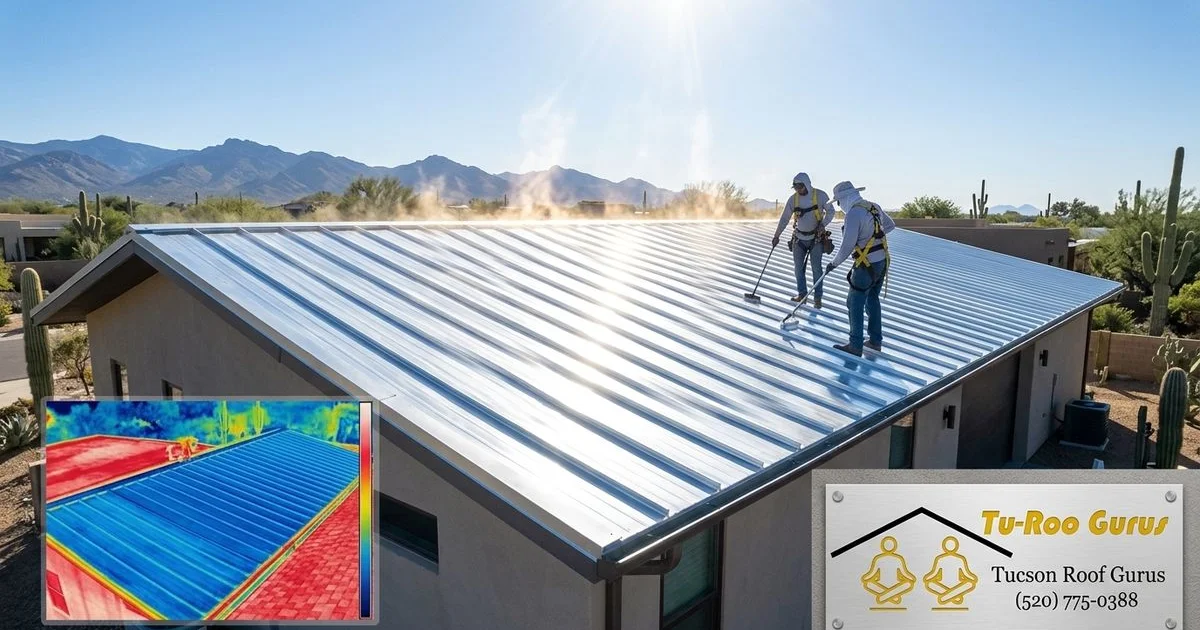
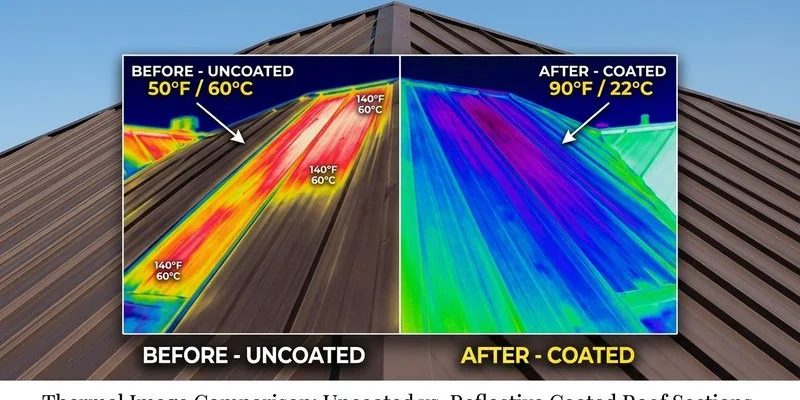
The physics behind reflective roof coatings are incredibly straightforward. Dark surfaces absorb solar radiation and convert that energy directly into heat. Our crews regularly measure standard dark-colored Tucson roofs hitting surface temperatures of 150 to 170 degrees Fahrenheit on a July afternoon.
This intense heat radiates straight through the ceiling. Your air conditioning unit must work much harder to compensate. We apply highly reflective materials to drop that surface temperature by 50 to 80 degrees.
The roof membrane might only reach 100 to 120 degrees during peak sun hours. Premium products like Henry 887 Tropi-Cool dramatically limit the thermal transfer into your living space. Our secret lies in measuring specific performance metrics before applying any chemical layer.
You should evaluate any potential product based on these three technical standards:
- Solar Reflectance: This measures the fraction of solar energy bounced back into the atmosphere.
- Thermal Emittance: This number reveals how efficiently the roof sheds any heat it does absorb.
- The SRI Standard: The Cool Roof Rating Council requires an initial Solar Reflectance Index (SRI) of at least 82 for steep-slope roofs to meet strict modern energy codes.
- Real-World Application: Quality silicone materials maintain high SRI ratings even after years of monsoon exposure.
How Reflective Roof Coatings Save Energy in Tucson: What the Numbers Actually Show
Most residential homeowners notice a 10 to 25 percent reduction in summer cooling costs after an application. The exact savings rely heavily on your existing attic insulation, the efficiency of your HVAC system, and your roof orientation. Our customers with older dark roofs and minimal insulation see the most dramatic financial improvements.
They frequently report summer electric bill drops of 80 to 120 dollars per month during the peak season. Tucson Electric Power (TEP) has proposed rate increases for 2026 that will push average electricity costs to roughly 17 cents per kilowatt-hour. We find that these rising utility rates make the protective layer even more valuable.
This translates to roughly 320 to 480 dollars in annual savings over a four-month summer. Properties with newer construction and high-efficiency AC systems typically see more modest drops of 40 to 60 dollars per month. Our commercial clients with expansive flat roofs save even more in absolute dollars.
A 10,000-square-foot commercial building transitioning from a dark surface to a highly reflective coating application can cut cooling costs by 15 to 30 percent. The financial return scales up rapidly based on the square footage.
| Property Profile | Typical Monthly Summer Savings | Estimated Annual Savings |
|---|---|---|
| Older Home (Dark Roof, Low Insulation) | $80 - $120 | $320 - $480 |
| Modern Home (Well-Insulated) | $40 - $60 | $160 - $240 |
| Commercial Flat Roof (10,000 sq ft) | $300+ | $1,200 - $2,500+ |
Payback Period: When Does the Investment Break Even?
Property owners naturally want to know the timeline for their break-even point. Modern silicone roof coatings cost roughly 1.50 to 4.50 dollars per square foot installed, according to 2026 industry averages. Our typical residential projects average around three thousand dollars total.
The simple payback period lands at seven to eight years if you save 400 dollars annually. High-quality applications often perform for 10 to 15 years in southern Arizona. We guarantee that this timeline creates five to eight years of pure net savings after you recover the initial cost.
Commercial projects often achieve an even shorter payback window due to the massive scale of the roof area. A commercial project costing eight thousand dollars might save two thousand dollars a year, paying for itself in just four years. Our calculations prove that delaying a full tear-off saves you thousands of dollars down the road.
You should consider four main factors that accelerate this payback timeline:
- Upfront Material Costs: Quality silicone systems run 1.50 to 4.50 dollars per square foot.
- Annual Energy Reductions: You can expect to save around 400 dollars yearly on average residential properties.
- Extended Roof Life: Delaying a complete tear-off adds thousands of dollars in deferred replacement value.
- Utility Rate Hikes: Every time your electric provider raises rates, your previous energy savings become more valuable.
Which Coating Types Perform Best in Tucson
The brutal desert climate destroys cheap building materials very quickly. You must select the correct chemical formulation to survive the monsoon rains and the scorching June sun. Our extensive field testing highlights three main categories that dominate the local market.
Acrylic Coatings
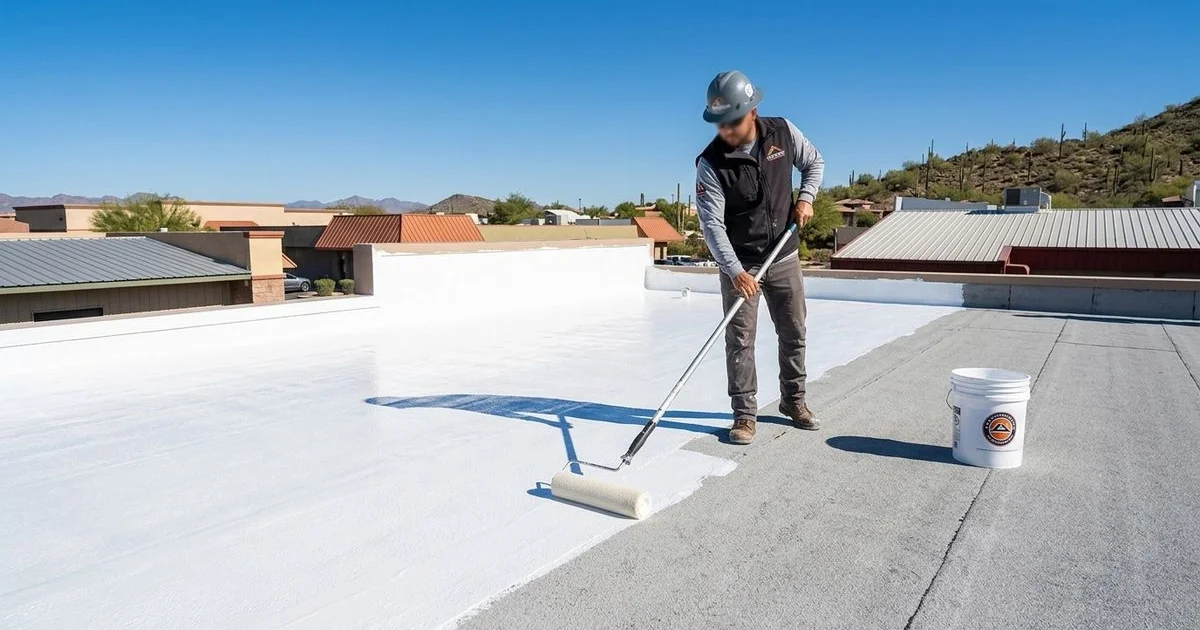
Acrylic formulas represent the most affordable entry point for property owners. They provide brilliant white reflectivity and work beautifully on roofs with excellent drainage. Our technicians do not recommend acrylic for perfectly flat surfaces.
Water that pools after a heavy monsoon storm will break down an acrylic layer very rapidly. The chemical structure softens and separates from the substrate under constant moisture. We only apply this material on structures with a distinct pitch that sheds water instantly.
Silicone Coatings
Silicone stands as the absolute best choice for flat roofs in the desert. Premium brands like GE Enduris handle standing water effortlessly without any chemical degradation. Our top recommendation for most commercial and residential flat roofing applications is a pure silicone product.
It carries a higher upfront cost, but the superior UV resistance and longevity easily justify the price tag. Dirt pickup can be an issue over time, so occasional light power washing helps maintain peak reflectivity. We find that silicone outlasts other options by five to seven years in Pima County.
Elastomeric Coatings
Elastomeric products provide incredible flexibility for structures that shift and settle. A roof surface can swing 80 degrees in temperature between a cool night and a hot afternoon. Our team uses elastomeric formulas on sloped roofs to bridge small cracks during this constant thermal expansion.
The flexible nature prevents the material from peeling or snapping. Asphalt shingles, common in the Foothills area, pair exceptionally well with this material.
When Reflective Coatings Do Not Make Financial Sense
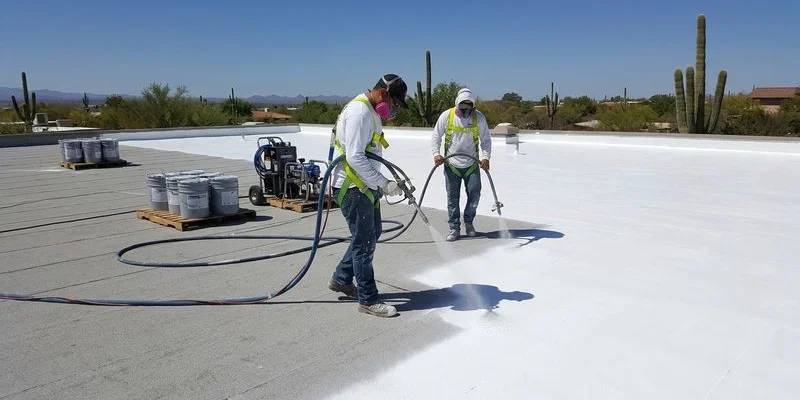
These liquid-applied barriers provide excellent value, but they are not a miracle cure for every building. You should skip this investment under specific circumstances. Our honest assessments frequently steer clients away from surface treatments if the underlying conditions are wrong.
- Your roof is severely aged: Spending thousands of dollars to coat a surface that will fail in two years is a massive waste. You are much better off installing a completely new roof system that includes built-in reflective technology.
- Your attic is heavily insulated: The Department of Energy requires strict insulation codes for new construction. An R-38 insulated attic blocks so much heat that a surface layer offers diminishing returns. Tucson Electric Power offers an 800-dollar residential rebate for attic insulation upgrades in 2026, which makes insulation a smarter first step.
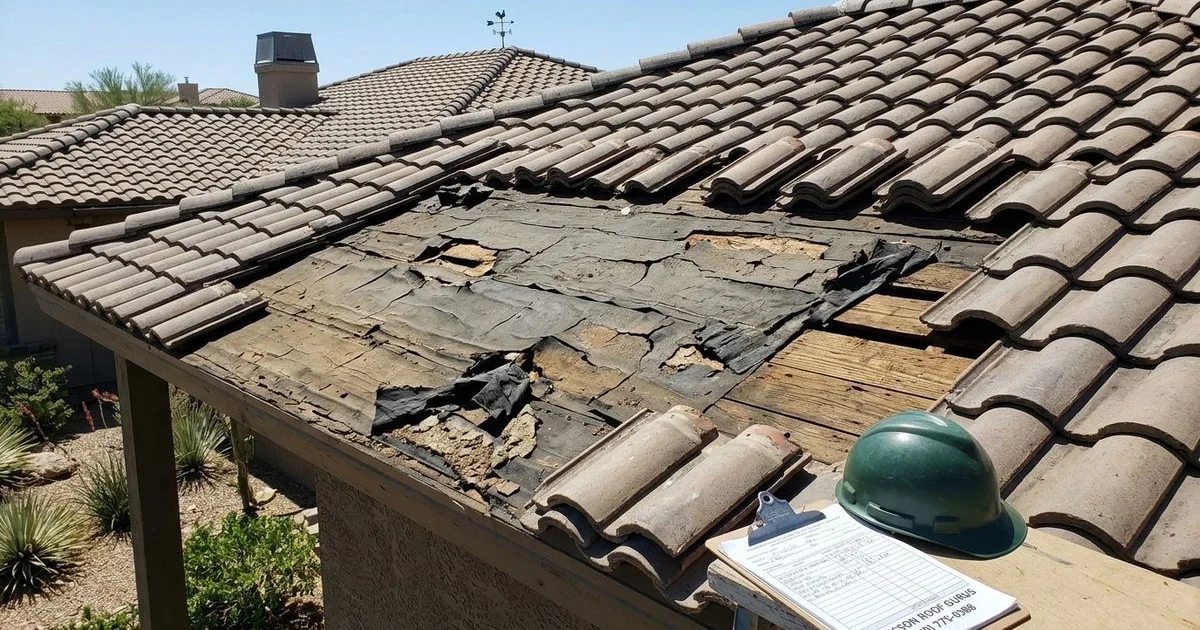
- You have structural water damage: Liquid membranes are preservation tools, not repair patches. Saturated insulation or rotting wood decking must be replaced entirely. We always insist on performing a proper roof repair before sealing any surface.
Moisture trapped under a new membrane will boil during the summer. This causes massive blisters that destroy the entire application.
Additional Benefits Beyond Energy Savings
The lower utility bills are just the beginning of the return on investment. The physical protection adds incredible value to the property over time. Our clients frequently mention several secondary benefits that improve their daily lives.
- Extended Roof Lifespan: Blocking the harsh ultraviolet radiation stops your primary membrane from turning brittle and cracking.
- Reduced Urban Heat Island Effect: Pima County recorded 146 heat-related deaths in 2024. Widespread use of white roofs reflects sunlight back into space, lowering ambient neighborhood temperatures.
- Enhanced Indoor Comfort: Less radiant heat pushing through the ceiling creates a much more consistent climate in every room.
- Potential Utility Rebates: Local utilities frequently update their incentive programs. We always recommend checking with your power company for active efficiency credits to lower your initial installation costs.
The Bottom Line on Reflective Coatings in Tucson
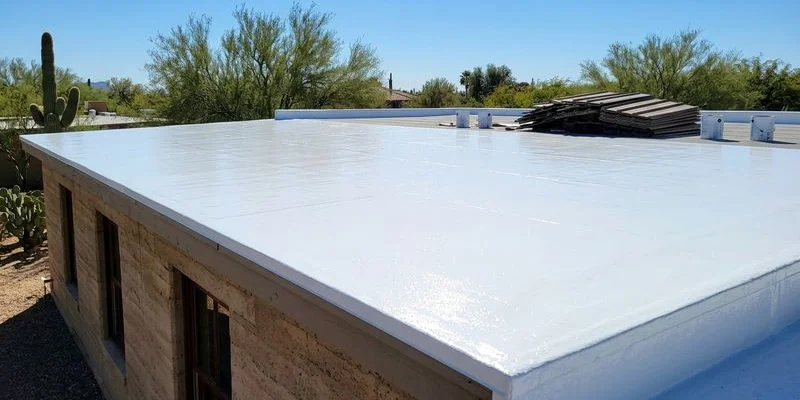
When analyzing how reflective roof coatings save energy in Tucson, what the numbers actually show is a clear financial victory. These protective layers remain one of the smartest property upgrades available in southern Arizona today. Our extensive field experience proves that a professional application lowers bills and protects your building.
You just need to match the correct chemical formula to your specific architecture. A high-quality silicone or elastomeric product will handle the extreme weather swings with ease. We take pride in helping our neighbors make informed, data-backed decisions.
If you are curious about the precise numbers for your home or business, please reach out for a free assessment. The structure evaluation will give you a transparent breakdown of potential utility savings and costs.

Kevin Bayes
Owner, Tucson Roof Gurus
Kevin Bayes has spent over 25 years installing and repairing roofs across southern Arizona.
Free Roofing Estimate
Need help with your roof? Call us for a no-obligation estimate.
(520) 775-0388