Any veteran property owner recognizes exactly how brutal the Sonoran Desert is on exterior building materials.
We see the same destructive patterns play out on residential properties year after year across southern Arizona. Many homeowners eventually ask, how often should you inspect your roof in Tucson? A seasonal guide provides the most practical answer to that question.
Surface temperatures regularly hit 160 degrees Fahrenheit during a July afternoon, only to plummet into the 80s after sunset. Those microscopic gaps from thermal expansion become massive liabilities once the summer storms arrive. We will lay out the exact warning signs our crews look for to keep your home protected.
How Often Should You Inspect Your Roof in Tucson? A Seasonal Guide to Minimums
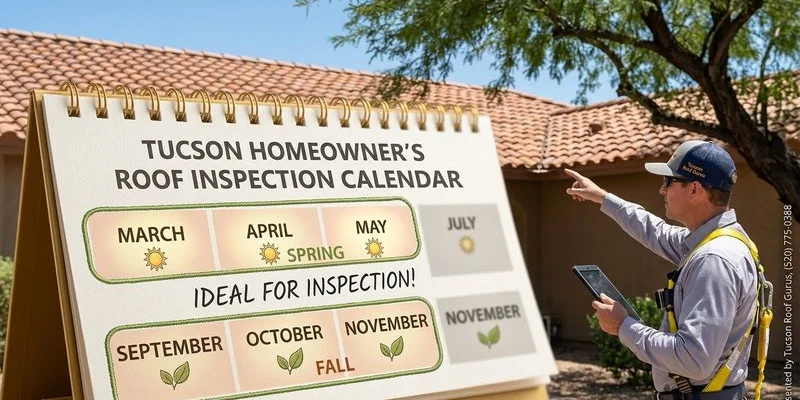
For any structure in southern Arizona, a minimum of two professional inspections per year is non-negotiable. We base this schedule entirely on our two most consequential weather seasons, as the timing dictates what type of damage you are trying to prevent. The official monsoon season runs from June 15th through September 30th, creating a hard deadline for preventative maintenance.
Spring Pre-Monsoon Assessment (April to May)
The primary goal here is to identify and fix any vulnerabilities before the heavy rains drop. We often find that mild winter temperature swings still produce enough thermal shock to loosen fasteners on a deck that was perfectly fine the previous autumn.
A spring check secures these loose points before they face 60 to 80 mph microburst wind gusts during July. Addressing these minor issues in May keeps your underlying felt paper completely dry.
Fall Post-Monsoon Assessment (October to November)
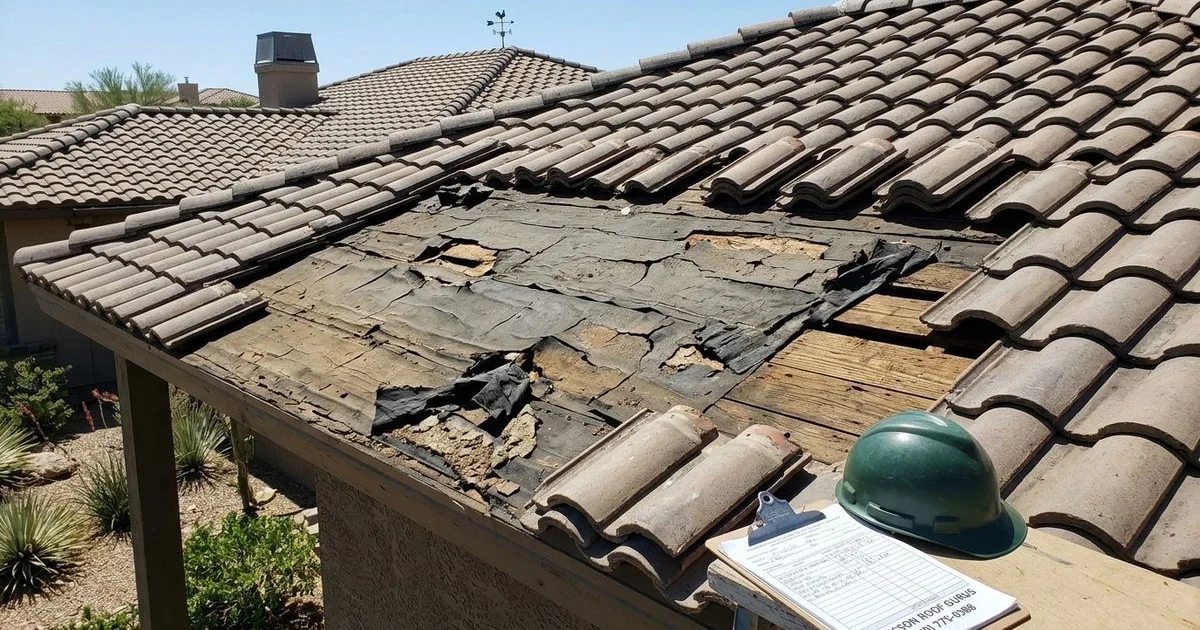
This evaluation serves as your critical post-storm damage control check. Monsoon season remains the single most destructive period for local properties, dumping inches of rain in mere minutes. We consistently find that intense microbursts dislodge heavy 9-pound concrete tiles and pack drainage scuppers with blowing dirt from August haboobs.
Catching this storm damage in October prevents a minor flashing tear from becoming a major winter leak. A consistent twice-yearly schedule forms the core of proper roof maintenance in our area.
When You Should Inspect More Frequently
Certain property conditions absolutely demand more frequent monitoring than the standard twice-yearly minimum. We advise quarterly checks or adding a dedicated mid-summer evaluation if your home fits any of these specific risk categories.
- Systems older than 15 years: Older materials have absorbed massive amounts of solar radiation. Asphalt shingles from brands like Owens Corning or GAF lose their protective UV granules over time, making them brittle and highly susceptible to cracking under heat stress.
- Properties with recent repairs: Any patched area requires careful monitoring to ensure the new materials bond correctly. The underlying issue that caused the first failure often places stress on the adjacent decking.
- Homes with built-up or foam systems: Flat designs are notoriously prone to ponding water if drainage slopes fail. We detail the exact warning signs of membrane failure in our post on common flat roof problems in Tucson, which usually stem from the intense UV rays breaking down elastomeric coatings like APOC or Henry products.
- Houses under mature trees: Palo verde or mesquite branches will rapidly drop seed pods and leaves into your valleys and gutters. This organic debris acts like a sponge during rains, trapping moisture directly against your underlayment and accelerating wood rot.
- Following severe weather events: Unusual hailstorms or neighborhood microbursts justify an immediate check. You do not have to climb up there yourself, as a quick scan with binoculars from the driveway often reveals displaced tiles or missing shingles.
What to Check During a Spring Inspection
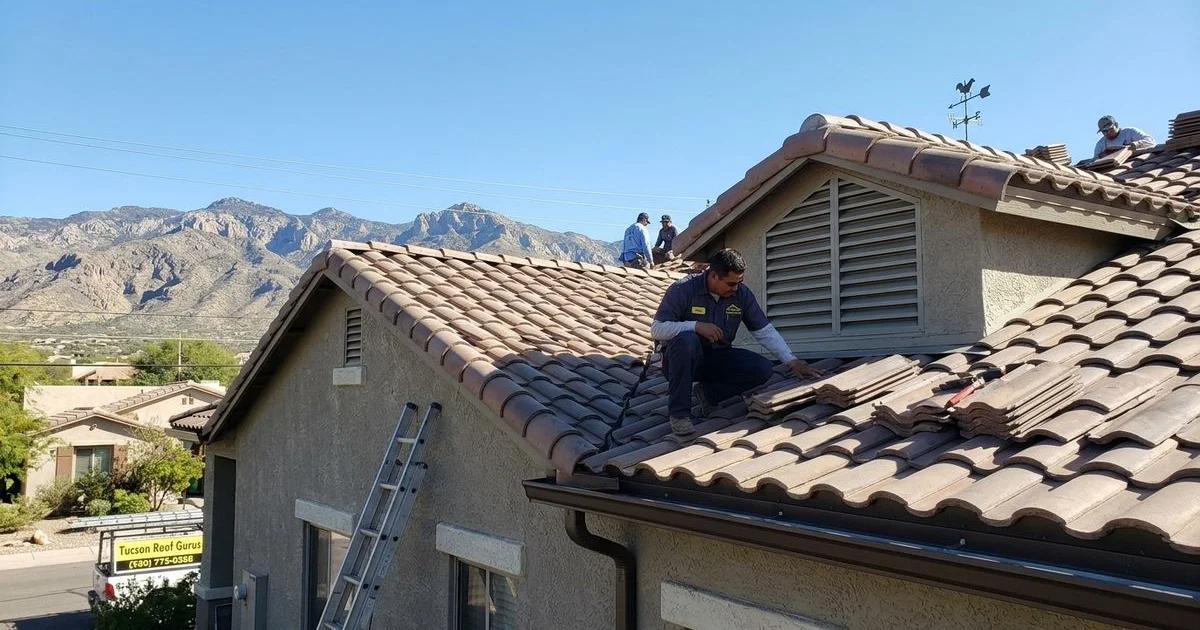
A proper spring evaluation makes sure your property is sealed and ready for the harsh summer demands. We train our crews at Tucson Roof Gurus to inspect several highly specific failure points that tend to break down during the winter months. Focusing on these components prevents minor wear from turning into a major disaster.
Flashing and Penetration Seals
Pipe boots, skylights, and HVAC units are your most common leak sources. The caulking around these penetrations dries out and separates after months of continuous sun exposure. We check every single seal to ensure water cannot penetrate these gaps during a sudden downpour.
Applying a fresh bead of premium polyurethane sealant, like Sikaflex or OSI Quad Max, in May will save you thousands of dollars in drywall repairs in August.
Flat Roof Drainage and Scuppers
Debris must be cleared from all scuppers and internal drains to allow free water flow. A standard 4x6 inch scupper blocked by pigeon nests or leaves can flood a flat structure with hundreds of gallons of water in a matter of minutes.
We always verify that the slight slope directing water to the edge remains intact and free of depressions. Standing water weighs 8.3 pounds per gallon, which places immense structural strain on your ceiling joists.
Surface Material Integrity
Asphalt shingles lose their UV-protective granules under the intense Arizona sun, which rapidly accelerates deterioration. We examine heavy concrete and Boral clay tiles for hairline cracks that are completely invisible from the ground.
Intense solar radiation on flat surfaces often causes alligatoring, a process where the top coating develops a scaly, cracked pattern. This specific defect requires immediate scraping and recoating before the monsoon humidity sets in.
What to Check During a Fall Inspection
The autumn assessment focuses entirely on identifying new damage left behind by the recent storm season. We know that even if your ceiling shows no visible water stains, hidden structural compromises often exist. Leaving these small fractures unattended gives moisture the perfect opportunity to rot your wood decking over the winter.
| Component | Monsoon Damage Indicator | Why It Matters |
|---|---|---|
| Drainage Systems | Scuppers packed with haboob dust and mesquite debris. | Retains stagnant water, accelerating the breakdown of your elastomeric roof coating. |
| Tile Alignment | Concrete tiles shifted out of their interlocking position by 60 mph winds. | Exposes the vulnerable 40-pound felt underlayment directly to the sun and winter rain. |
| Flashing Seals | Separated galvanized metal joints around chimneys and vents. | Creates a direct funnel for water to enter your attic space and soak your insulation. |
| Surface Condition | New dark spots, missing shingle granules, or deep membrane blisters. | Indicates points of active moisture intrusion that will rapidly worsen during winter freezes. |
DIY Visual Inspection vs Professional Inspection
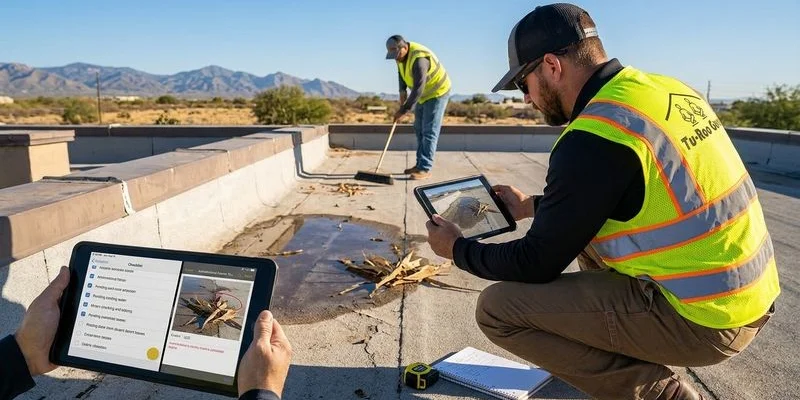
There is a massive difference between what a homeowner can see from the driveway and what a trained specialist finds on the deck. We completely support ground-level visual checks as a supplementary habit between your formal evaluations.
Taking ten minutes with a pair of binoculars allows you to spot obviously missing tiles or sagging structural lines. This quick scan provides an incredibly helpful baseline after a violent August thunderstorm rolls through your neighborhood.
The Hidden Dangers You Will Miss
A casual look from the yard will miss almost all developing structural failures. We routinely discover advanced membrane blistering, thermal cracking in sealants, and minor ponding issues that look perfectly fine from below.
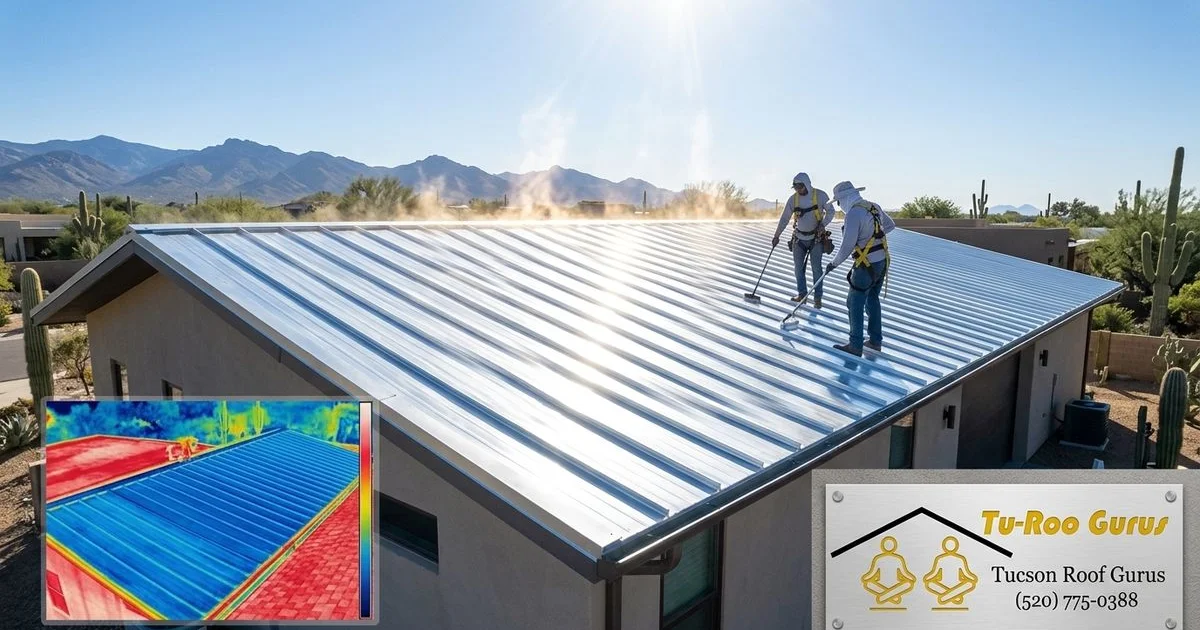
Professional crews utilize specialized tools like FLIR thermal imaging cameras to detect trapped moisture beneath the surface. These are the precise defects that eventually escalate into massive interior flooding. You can read more about evaluating your own limits in our post on DIY roof repair versus hiring a pro.
The True Value of a Professional Assessment
Hiring an expert in the local area generally costs between 150 and 450 dollars, depending on the square footage and pitch of your property. We contrast that small assessment fee against the massive expense of an undetected structural leak.
Based on 2026 southern Arizona industry data, an average full tile roof replacement in our city runs around 24,500 dollars, while dimensional shingle replacements often exceed 11,000 dollars. Spending a few hundred dollars to protect a twenty-thousand-dollar asset represents a highly practical financial calculation.
The Cost of Skipping Inspections
The financial consequences of deferred maintenance are severe in this climate. We receive emergency calls every summer from frantic homeowners dealing with collapsed, leaking ceilings. An initial investigation usually reveals a failed lead pipe boot or cracked tile that actually broke eighteen months prior.
Because the owner skipped their seasonal checks, water slowly rotted out the underlying OSB plywood deck. What could have been a quick 200-dollar roof repair now requires a structural rebuild and mold remediation totaling thousands of dollars.
Catching just one drainage issue or failed seal early will almost certainly save you more money than a decade’s worth of inspection fees.
The actual math heavily favors being proactive rather than reactive. We calculate that a full tile underlayment replacement currently costs between 11,500 and 13,500 dollars for an average Tucson home.
Paying 400 dollars a year for two inspections keeps that underlying felt completely dry and extends its functional lifespan significantly. Keeping small problems small allows you to budget for major upgrades on your own timeline, rather than funding a chaotic emergency repair during a storm.
Schedule Your Next Inspection
Delaying a thorough assessment only increases the risk of hidden weather damage compromising your home. We strongly encourage you to establish a baseline health report for your property right now, regardless of its age.
At Tucson Roof Gurus, our evaluations are honest, transparent, and include a detailed written report with high-resolution photos.
For anyone wondering how often should you inspect your roof in Tucson? A seasonal guide like this one always points to acting before the storms hit. Contact us to schedule your inspection today and take all the guesswork out of your property’s long-term protection.

Kevin Bayes
Owner, Tucson Roof Gurus
Kevin Bayes has spent over 25 years installing and repairing roofs across southern Arizona.
Free Roofing Estimate
Need help with your roof? Call us for a no-obligation estimate.
(520) 775-0388