You know the scenario. A neighbor gets a ceiling leak during a sudden July microburst, and everyone on the block starts looking nervously at their own homes.
We see this exact panic every summer at Tucson Roof Gurus. Homeowner anxiety usually spikes right before the storm season hits.
“The visible tiles on your roof rarely tell the whole story.”
Our owner, Kevin Bayes, has spent over 25 years inspecting and repairing systems across southern Arizona. The real secret to longevity is rarely visible from the sidewalk.
Spotting signs your tile roof underlayment is failing early serves as the absolute best defense against major water damage.
We are going to break down the realistic timelines and the exact maintenance steps that actually work.
How Long Do Tile Roofs Last in Tucson? Lifespan, Maintenance, and When to Replace
The lifespan of a protective layer depends heavily on the specific materials used.
| Material | Estimated Lifespan | Key Characteristics |
|---|---|---|
| Clay Tile | 75 to 100+ years | Highly resistant to UV fading and thermal expansion. |
| Concrete Tile | 40 to 60 years | Porous surface that gradually fades and weathers. |
| SBS-Modified Underlayment | 30 to 50 years | Rubberized asphalt resists high heat and tears. |
| Traditional Organic Felt | 20 to 30 years | Dries out and becomes brittle under desert sun. |
We often find that residents confuse the lifespan of the outer shell with the lifespan of the entire barrier. Concrete tiles from major manufacturers easily last 50 years.
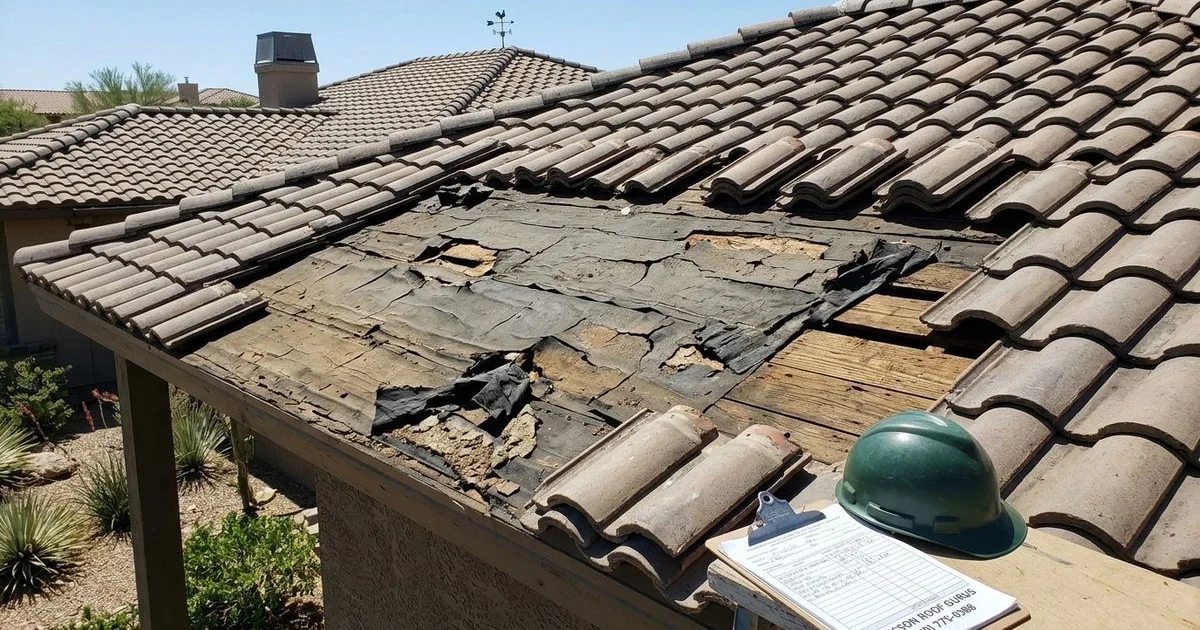
Our daily inspections routinely reveal that the traditional 30-pound felt paper underneath fails decades earlier. The intense Arizona heat literally bakes organic felt until it becomes brittle and shatters to the touch.
We strongly advise upgrading to SBS-modified bitumen or modern synthetic options. High-performance products from brands like Westlake Royal Roofing withstand the desert climate significantly better.
The top advantages of modern synthetic underlayment include:
- High heat resistance up to 250 degrees
- Unmatched tear strength during installation
- Complete immunity to roof rats and pests
Our repair crews have even seen cases where roof rats chew through organic felt. Synthetic materials help prevent this frustrating issue entirely.
We know a premium underlayment acts as the single best upgrade you can make for long-term protection.
What Affects Tile Roof Lifespan in Tucson?
UV Exposure
Tucson consistently ranks among the highest cities in the country for ultraviolet radiation.
We experience extreme UV index levels of 11 or higher throughout June and July according to recent National Weather Service data. This intense solar radiation acts like a slow-motion sandblaster on building materials.
Our experience shows that natural clay handles this intense exposure essentially perfectly. The color is baked completely through the clay body to make it immune to fading.
We see a completely different story with painted concrete products. The surface pigments on concrete begin to break down rapidly after 10 to 15 years of daily UV bombardment.
“The constant daily UV index of 11+ in Tucson degrades exposed felt paper in a matter of weeks, not years.”
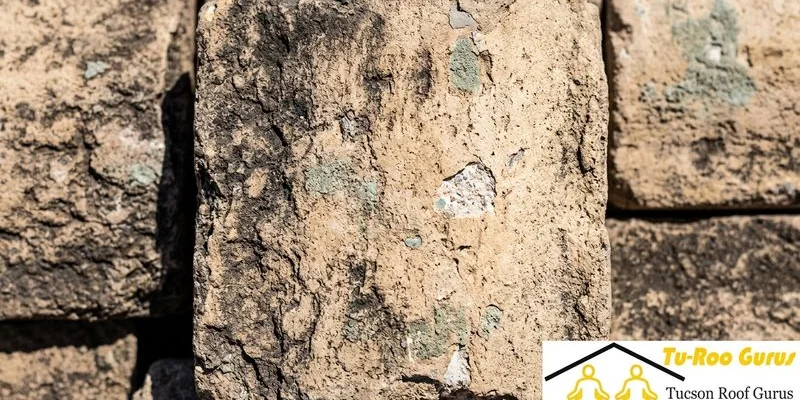
Our technicians often notice a chalky residue on older concrete roofs caused by this surface degradation. Severe weathering can eventually make the concrete more porous and prone to absorbing rain.
Thermal Cycling
The Sonoran Desert experiences massive daily temperature swings that physically stress your home.
We recorded summer days in 2025 where afternoon temperatures peaked at 113 degrees and dropped below 75 degrees at night. That 40-degree rapid cooling cycle forces building components to expand and contract constantly.
Our local climate creates a daily thermal shock that residents simply do not see in coastal states. Repeated structural movement causes hairline fractures in rigid materials over several decades.
We find that the denser molecular structure of clay pieces handles thermal cycling much better.
The most vulnerable areas to thermal shock include:
- South-facing roof slopes
- West-facing sections catching late afternoon sun
- Rigid concrete ridge caps
Our local repair crews frequently replace cracked concrete units on southern exposures where the temperature swings are most extreme. These tiny fractures allow water to bypass the protective shell and sit directly on the underlayment.
Monsoon Impact
The official Arizona monsoon season runs from June 15th through September 30th.
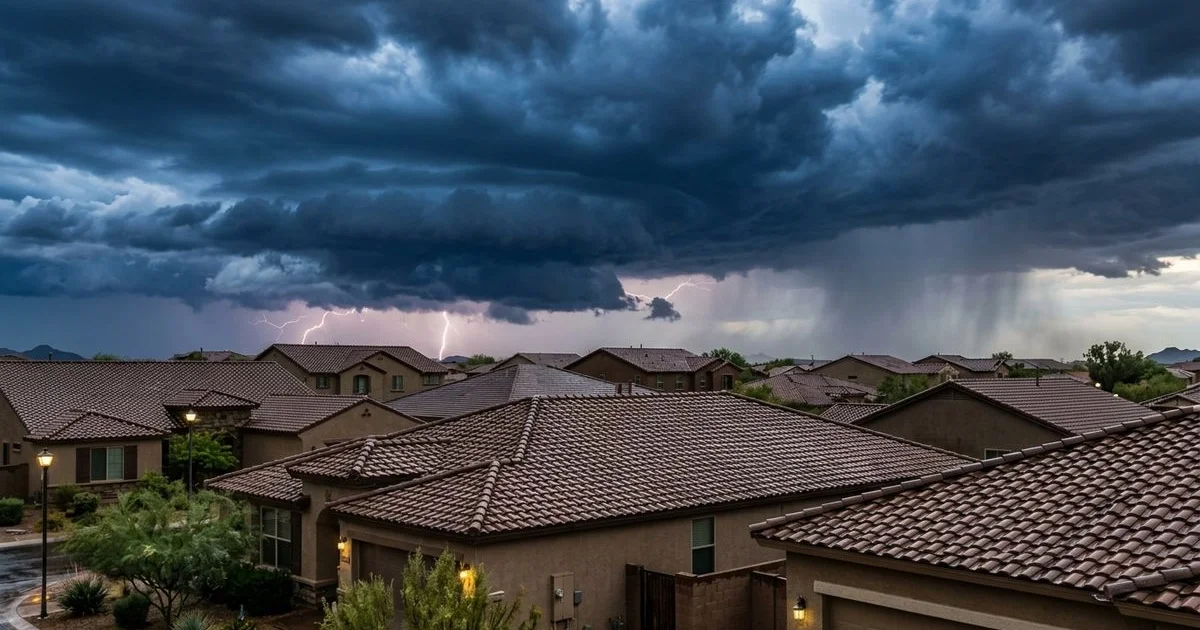
We prepare for intense storm damage every single year during this critical weather window. Recent storms in the Tucson Mountains produced recorded wind gusts hitting 76 miles per hour.
Our emergency dispatch teams respond to severe microbursts that can lift and displace heavy pieces in seconds. Displaced materials create an immediate funnel for rainwater to reach your vulnerable underlayment.
Common storm damages include:
- Displaced ridge caps along the peak
- Cracked valley channels from flying debris
- Wind-driven branch punctures
- Shifted overlapping sections
We keep a large inventory of common profiles specifically for rapid post-storm patching. The official guide on preparing your roof for Tucson’s monsoon season offers specific steps to secure your property.
Our specialized technicians know that prompt repairs after a major wind event stop cumulative water damage. Ignoring a broken piece guarantees a severe leak during the next heavy downpour.
Installation Quality
Premium materials only perform as well as the initial installation allows.
We regularly inspect 20-year-old homes in Oro Valley that require complete replacements due to sloppy original workmanship. A rushed contracting job leaves highly vulnerable areas exposed to the elements.
Our experienced installers focus heavily on the critical transition zones where most leaks originate.
The most frequent installation failures include:
- Fastening pieces improperly without adequate mechanical clips.
- Using cheap 15-pound felt instead of durable SBS-modified underlayment.
- Leaving valleys unprotected without self-adhering waterproofing membranes.
- Failing to install proper ventilation to release trapped attic heat.
We fix these specific structural issues during every replacement project. Proper fastening and premium valley flashing keep the barrier watertight even when individual pieces break.
Maintenance That Extends Tile Roof Life
Regular roof maintenance remains the only proven way to get 50 years out of a concrete system.
Annual Visual Inspection
A quick visual check from the ground catches most obvious functional problems early.
We suggest walking your property perimeter every May before the violent summer storms arrive. Use binoculars to look closely for shifted, cracked, or completely missing pieces.
Our diagnostic technicians recommend paying special attention to the areas around chimneys and skylights. These complex penetrations are notorious for developing early water leaks.
Keep Valleys and Gutters Clear
Trapped debris creates miniature dams that force water sideways under the overlapping sections.
We pull out countless bags of mesquite pods and palo verde leaves from drainage valleys every fall. This wet organic matter traps moisture and accelerates the rotting process of older felt paper.
Our seasonal cleaning service clears these critical valleys to ensure water flows freely off the edges. A totally clean valley acts as an essential component for proper drainage.
Replace Broken Tiles Promptly
A single broken piece exposes the sensitive waterproof membrane to direct, intense sunlight.
We strongly advise replacing cracked segments within a few weeks of noticing them. The extreme desert UV index will degrade exposed felt paper in a matter of months.
Our minor repair visits cost significantly less than replacing rotted plywood decking later. Small preventative actions consistently yield the highest return on investment.
Professional Inspection Every 3 to 5 Years
Basic ground-level checks miss the silent deterioration happening underneath the visible surface.
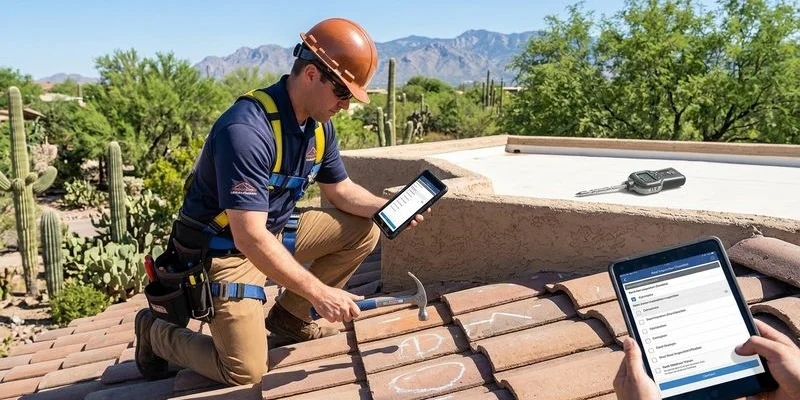
We physically lift selected pieces in high-water zones to thoroughly examine the condition of the membrane. This hands-on evaluation serves as the only proven method to spot chalking or brittle paper before a leak occurs.
Our dedicated team provides these detailed assessments to help homeowners accurately budget for future upgrades. Regular professional inspections eliminate the terrible surprise of a sudden ceiling collapse.
When Should You Replace a Tile Roof?
Underlayment Replacement (Re-Tile)
Most residential systems in our area require at least one underlayment replacement during their functional lifespan.
We call this specific procedure a lift and relay because the crew carefully removes the original pieces and sets them aside. The workers then strip the old paper, install a modern synthetic membrane, and reinstall the original materials.
Our comprehensive guide detailing tile roof repair costs in Tucson explains the exact financial breakdown of this process.
Warning signs that indicate a necessary re-tile include:
- Water stains forming on your interior ceilings after a heavy rain.
- A distinctly musty smell accumulating in the upper attic space.
- The original 30-pound felt paper completely drying out and tearing.
- The home approaching 25 years old with original builder-grade materials.
We regularly save homeowners significant money by salvaging up to 80 percent of the original concrete or clay material. This cost-effective approach restores the watertight integrity of the structure without the massive expense of buying brand new exterior pieces.
Full Tile Roof Replacement
Sometimes the existing exterior materials are simply too degraded to safely save.
We perform full system replacements when the concrete is heavily weathered, highly porous, and crumbling. Many older profiles from the 1990s are now completely discontinued, making it impossible to find matching replacements for a partial repair.
“A full replacement is an opportunity to update the entire aesthetic and energy efficiency of your property.”
Our design consultants frequently help clients use this opportunity to upgrade to a completely different aesthetic. Upgrading materials drastically changes the entire curb appeal of the property.
We help customers logically compare all available material options for their specific neighborhood HOA requirements. You can easily explore the benefits of metal roofing in Arizona’s desert climate if you want a lighter alternative.
Our detailed clay vs concrete tile roofing guide breaks down the exact differences if you prefer to stick with a traditional southwestern look. Choosing the perfect material depends heavily on your long-term plans for the property.
The Bottom Line
A properly installed system acts as a long-term investment that easily protects your home for decades.
We know that natural clay can last a century, and quality concrete provides up to 60 years of reliable service. Understanding ‘How Long Do Tile Roofs Last in Tucson? Lifespan, Maintenance, and When to Replace’ ensures you maximize your financial investment.
Our proactive preventative approach stops minor sun damage from turning into major structural rot. Proper seasonal care guarantees your property remains safe through every single monsoon season.

Schedule Your Tile Roof Evaluation
Catching a small ceiling leak now saves thousands of dollars in extensive drywall repairs later.
Our tile roofing specialists provide honest assessments whether you need a minor patch or a complete synthetic membrane upgrade.
Contact us today to schedule a free evaluation and get the exact facts about your specific property.

Kevin Bayes
Owner, Tucson Roof Gurus
Kevin Bayes has spent over 25 years installing and repairing roofs across southern Arizona. He founded Tucson Roof Gurus to bring honest, owner-operated roofing services to the community.
Free Roofing Estimate
Need help with your roof? Call us for a no-obligation estimate.
(520) 775-0388