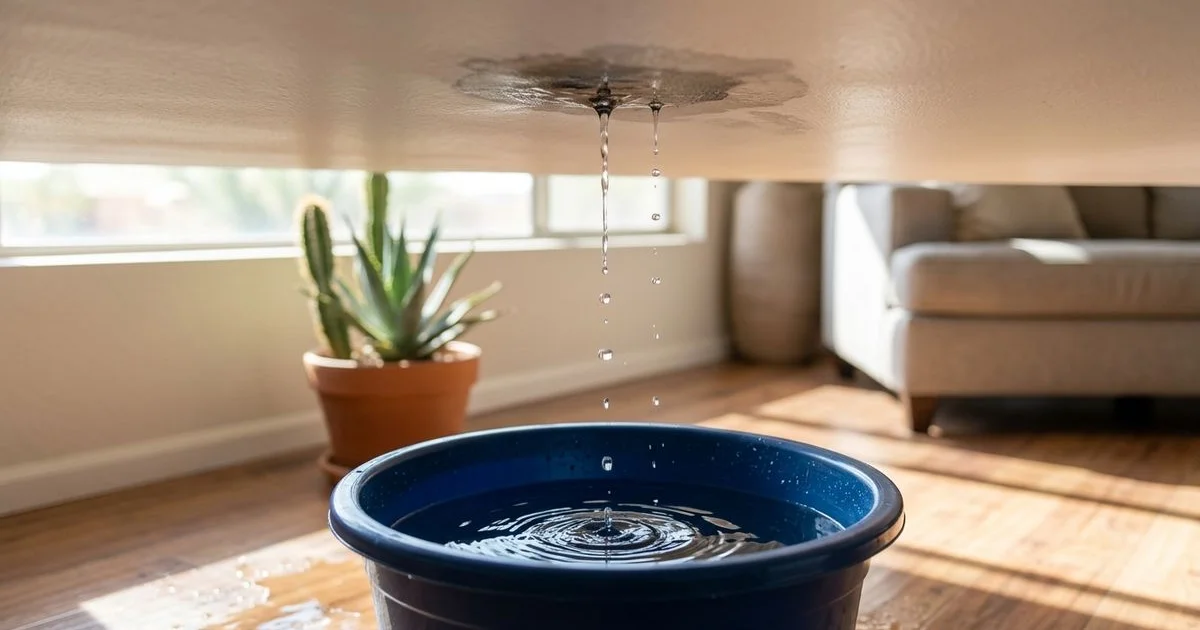
You know how a sudden leak during monsoon season forces a quick decision about your property. That urgency often leaves homeowners debating a flat roof layover vs tear-off: which option saves you more in the long run?
From what we have seen in the local market, making the wrong choice can easily double your roofing costs over a 20-year period.
We regularly inspect homes where a cheap shortcut trapped moisture and destroyed the decking. A proper evaluation requires looking at the data and understanding the hidden risks of our desert climate.
Let’s break down the actual costs of both methods.
Then we will explore exactly when a layover makes sense and when a complete replacement is the only smart investment.
What a Layover Actually Involves
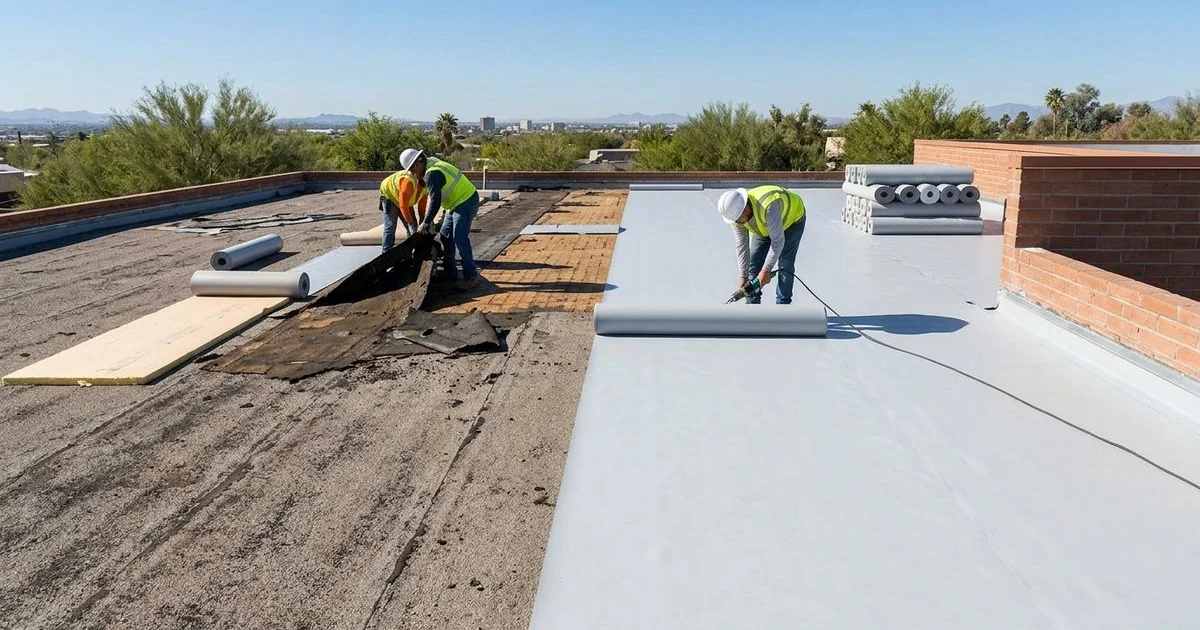
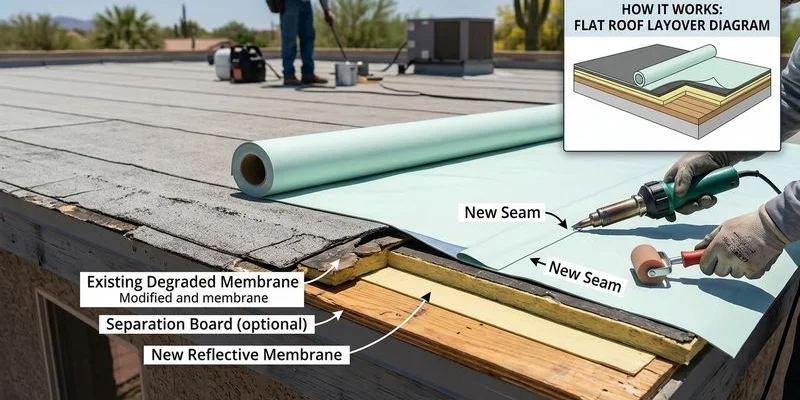
A flat roof layover involves installing a new membrane directly on top of your existing roof. This method leaves the old materials in place to serve as a base layer for the new surface. We typically see homeowners choose 60-mil materials like GAF EverGuard TPO or modified bitumen for this specific application.
Skipping the demolition phase entirely saves significant time. Crews clean the existing surface, address obvious bubbling, and mechanically attach the new membrane directly over the old one.
Here is the standard progression for a professional layover:
- Surface Preparation: Technicians sweep and power-wash the old membrane to remove loose debris.
- Minor Repairs: Workers slice and patch large blisters to create a flatter base.
- Fastening: The crew rolls out the new material and secures it using heavy-duty Olympic fasteners or industrial adhesives.
- Seam Welding: Leister hot-air tools fuse the seams together at around 1,000 degrees Fahrenheit to create a watertight barrier.
This approach generates minimal waste and requires significantly less labor. A typical layover cuts installation time in half compared to starting from scratch.
You will usually see a 25 to 40 percent reduction in upfront costs with this method. A standard 2,500-square-foot residential roof might run between $11,000 and $15,000 for a layover in 2026.
What a Full Tear-Off Involves
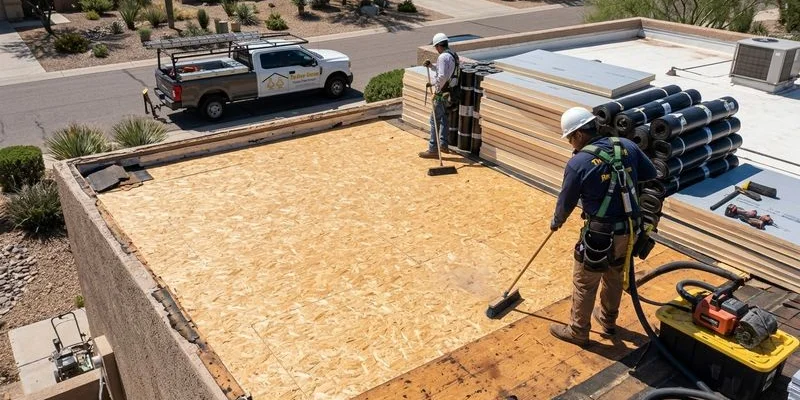
A tear-off requires stripping away every layer of roofing material down to the bare wooden deck. Removing the old membrane, saturated insulation, and rusted fasteners exposes the true condition of your home’s structure. We prefer this method because it completely eliminates hidden variables.
Contractors haul away thousands of pounds of debris during this demolition phase. Discarding this heavy waste at facilities like the Los Reales Sustainability Campus accounts for a significant portion of the higher price tag.
The Structural Upgrade Phase
Once the deck is secure, the rebuilding process begins from the bottom up. City of Tucson building codes mandate a minimum slope of 1/4 inch per foot for proper drainage. A complete tear-off allows roofers to install tapered Polyiso insulation boards to achieve this exact slope.
This rigid foam board offers an impressive R-value of 5.7 per inch. Applying a fresh 60-mil TPO or PVC membrane over a perfectly sloped, well-insulated deck guarantees maximum performance.
You can expect to pay roughly $24,510 on average for a full flat roof replacement on a 2,500-square-foot home in 2026. The investment secures a pristine system designed to withstand decades of harsh weather.
When a Layover Makes Sense
A layover serves as a practical solution under a very specific set of circumstances. Based on our extensive flat roofing projects across the region, you should only consider this route if your home meets strict criteria.
We always verify these conditions before drafting a layover proposal. Skipping these checks almost guarantees premature roof failure.
Here are the exact scenarios where a layover is a viable option:
- You Have Only One Existing Layer: The 2018 International Building Code, enforced strictly by Pima County, limits flat roofs to a maximum of two layers. You must tear everything off if two layers are already present.
- The Substrate is Completely Dry: Professional contractors use FLIR E8-XT thermal imaging cameras to scan the roof at dusk. This technology detects subtle temperature differences that indicate trapped moisture beneath the surface.
- The Surface is Uniform: A layover demands a relatively smooth base. Heavy blistering or deep depressions will instantly telegraph through the new membrane and cause pooling.
- Drainage is Flawless: Your existing setup must already move water effectively. A thin new membrane will not fix a roof that currently suffers from severe ponding.
When a Tear-Off Is the Better Choice
Ignoring underlying problems and slapping a new membrane on top creates a recipe for disaster. We strongly advise against layovers when structural integrity is questionable or moisture is present.
A single saturated section of insulation will rapidly degrade the new materials from the inside out. Using a Tramex Dec Scanner helps confirm if water has breached the lower levels of the system.
Our team at Tucson Roof Gurus, led by owner Kevin Bayes, has seen too many cheap layovers fail within five years. You must address the root cause of a leak rather than just covering it up.
Here are the red flags that make a tear-off mandatory:
- Trapped Moisture is Confirmed: Sealing wet insulation under a new membrane creates a permanent terrarium. This destroys the R-value of the insulation and accelerates wood rot.
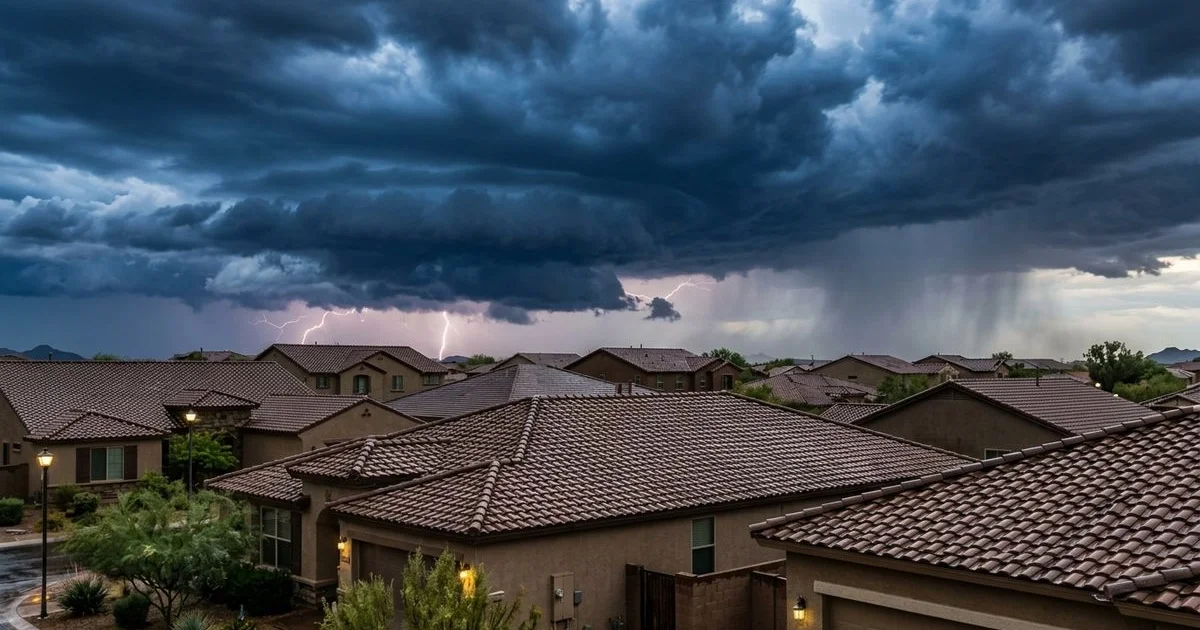
- Drainage is Defective: Tucson monsoons routinely dump two to three inches of rain per hour. You need access to the deck to install tapered insulation and fix persistent water ponding issues.
- The Two-Layer Limit is Reached: Building inspectors leave no room for negotiation on this rule. Adding a third layer creates excessive weight and violates structural safety regulations.
- Longevity is the Priority: A brand-new system installed on fresh decking provides the longest possible service life. This represents the most effective way to maximize the return on your roofing investment.
The Hidden Risk of Layovers in Tucson
Many national roofing guides fail to account for our brutal desert environment. A strategy that works perfectly in Ohio can cause massive structural damage in southern Arizona. We constantly remind homeowners about the unique thermal dynamics of our local climate.
Creating a sandwich of two waterproof membranes traps old adhesives and ambient air between the layers. This trapped air becomes highly volatile under the intense desert sun.
The Vaporization Effect
Roof surface temperatures in our region frequently reach 150 to 180 degrees Fahrenheit during July and August. This extreme heat forces any trapped moisture or air between the two layers to vaporize and expand rapidly.
The expanding gases push upward against the new membrane. This immense pressure creates massive blisters that stretch the material and severely weaken the welded seams.
“In a climate where roof surfaces hit 160 degrees, trapped moisture doesn’t just sit there. It vaporizes, expands, and systematically destroys the new membrane from underneath.”
We frequently replace layover roofs that suffered catastrophic blistering within just three years of installation. The heat amplifies minor flaws, turning a supposedly budget-friendly project into an expensive headache.
Selecting a material with a high Solar Reflectance Index (SRI) verified by the Cool Roof Rating Council helps reflect heat. It cannot stop vaporization if moisture is already trapped inside the assembly.
Flat Roof Layover vs Tear-Off: Which Option Saves You More in the Long Run?
Looking at the upfront price tag is a massive mistake when evaluating roof quotes. You have to project those costs across the actual lifespan of the materials. We use a 20-year timeline to give homeowners a realistic picture of their total financial commitment.
Let’s analyze the numbers for a standard 2,500-square-foot residential flat roof. The data reveals a surprising truth about long-term savings.
Currently, a standard layover requires an initial investment of roughly $13,000. That new surface will likely last 12 to 15 years before the intense UV exposure breaks it down.
Once that layover fails, building codes mandate a complete tear-off because the house will now have two layers. That future tear-off will likely cost upwards of $30,000 due to inflation and rising labor rates.
| Roofing Strategy | Initial Cost (2026 Average) | Estimated Lifespan | Total 20-Year Expense |
|---|---|---|---|
| Layover Now + Tear-Off Later | $13,000 | 12 to 15 Years | $43,000+ |
| Full Tear-Off Now | $24,510 | 20 to 25 Years | $24,510 |
The math clearly shows that doing the job right the first time keeps more money in your pocket. A fresh installation protects your property continuously without the looming threat of a mandatory double tear-off. For more details on material selection, check out our comparison of TPO vs PVC flat roofing in Tucson.
My Recommendation
You should always opt for a complete tear-off if your budget allows for the higher initial cost. Starting with a clean deck eliminates the guesswork and guarantees a solid foundation. We consider the peace of mind alone to be worth the extra investment.
A proper tear-off allows contractors to correct drainage slopes and upgrade your insulation. This comprehensive approach yields a significantly more durable and energy-efficient home.
That said, a layover remains a legitimate choice if you are facing tight financial constraints and your single-layer roof is completely dry. You just need to proceed with extreme caution.
Require your contractor to follow these non-negotiable steps before approving a layover:
- Perform a thorough FLIR thermal imaging scan to detect hidden moisture.
- Provide physical core samples to verify the decking condition.
- Cut out and replace any isolated wet spots prior to installing the new membrane.
- Install adequate ventilation to manage future heat buildup.
Get an Honest Assessment
Your final decision must rely on hard data rather than visual guesswork. A surface-level glance cannot reveal the true condition of your insulation or wooden decking.
We utilize advanced diagnostic tools to map out exactly what is happening beneath your current membrane. Technicians will deploy a DJI Mavic thermal drone to identify moisture pockets and check your exact roof pitch.
“Guessing on a flat roof is the fastest way to waste ten thousand dollars. Demand thermal evidence before signing a contract.”
Schedule an inspection and contact our team to get the facts about your specific property.
If you are still weighing a flat roof layover vs tear-off: which option saves you more in the long run? The answer always comes down to your unique structural data.
Making an informed choice now will protect your home and your wallet for decades to come.

Kevin Bayes
Owner, Tucson Roof Gurus
Kevin Bayes has spent over 25 years installing and repairing roofs across southern Arizona.
Free Roofing Estimate
Need help with your roof? Call us for a no-obligation estimate.
(520) 775-0388