Does a Metal Roof Make Your House Hotter? The Truth for Tucson Homeowners is actually quite surprising. Our owner, Kevin Bayes, built Tucson Roof Gurus on the fact that science proves the exact opposite.
The crucial distinction most people miss is the difference between retaining heat and reflecting solar energy.
Our installation crews witness how asphalt shingles trap heat and bake your attic. Standard roofs act like heavy thermal blankets. We are going to break down the latest 2026 surface temperature data to show exactly how these panels lower utility bills and keep your living space comfortable.
Does a Metal Roof Make Your House Hotter? The Truth for Tucson Homeowners
The secret to understanding this material lies in two specific physical properties. We always explain to clients that thermal emissivity and solar reflectance dictate exactly how much energy enters your living space. These two factors work together to fight the harsh Arizona sun. Our team relies on this science to deliver cooler homes.
Solar Reflectance: Bouncing the Desert Sun
Solar reflectance measures how much solar energy a surface bounces back into the atmosphere. Our installers see how absorbed energy converts into radiant heat that bakes your attic. Dark asphalt shingles absorb up to 90 percent of this incoming radiation.
We use data from the Lawrence Berkeley National Laboratory showing that light-colored panels stay drastically cooler than traditional materials. Their 2026 studies reveal that for every 10 percent increase in roof reflectance, heating and cooling costs drop by two cents per square foot annually. Our modern steel panels easily reflect 50 to 80 percent of that solar energy away from your property.
The Environmental Protection Agency notes that Energy Star-rated steep-slope roofs must meet specific reflectance requirements to qualify for certifications.
Thermal Emissivity: Cooling Down Quickly
Thermal emissivity measures how quickly a material releases the heat it does absorb. We maintain records showing that painted steel panels can achieve an emissivity rating as high as 90 percent. Asphalt shingles hold onto warmth and continue radiating that heat into your home well into the evening.
Our preferred steel avoids the thermal shock that causes asphalt to crack during sudden monsoon temperature drops. This rapid cooling prevents structural damage caused by trapped heat. We know this trapped heat forces your air conditioning system to run constantly.
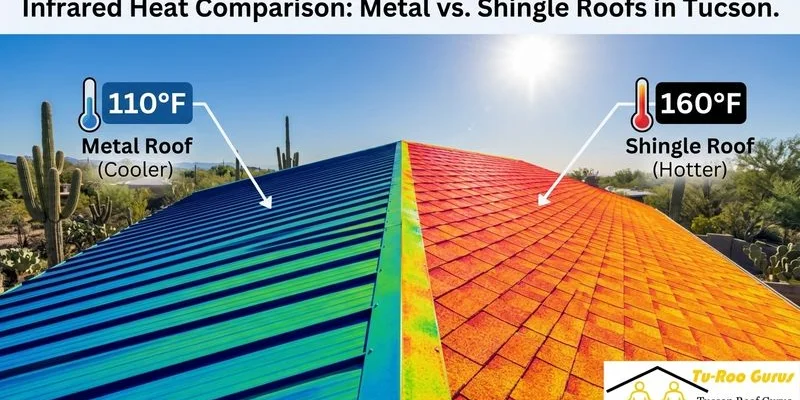
Real Numbers: How Much Cooler Is a Metal Roof?
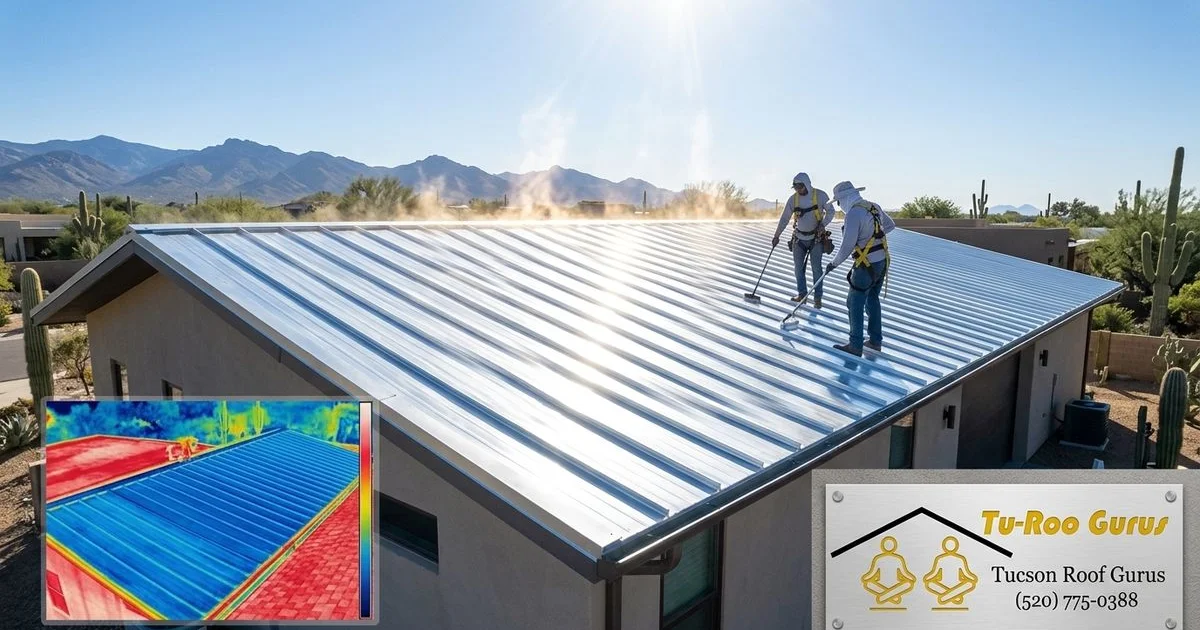
The exact surface temperature difference between materials is striking on a 110-degree day. Our temperature guns regularly clock standard cool-coated panels at a much more manageable 130 degrees. Dark shingles routinely reach 180 degrees Fahrenheit in peak sunlight. We compiled a comparison to show exactly how different materials handle the afternoon heat.
Surface and Attic Temperature Drops
This 50-degree surface reduction translates into a significantly more comfortable interior. Our local data indicates that attic temperatures average 20 to 35 degrees lower after a panel upgrade. The lower surface temperature places less strain on your entire cooling system.
We see that a cooler attic means your ductwork does not have to fight through a layer of superheated air.
| Roofing Material | Approximate Surface Temp | Heat Transfer to Attic |
|---|---|---|
| Dark asphalt shingles | 160-180°F | Very high |
| Light asphalt shingles | 140-160°F | High |
| Concrete tile | 130-150°F | Moderate-high |
| Metal (standard color) | 120-140°F | Moderate |
| Metal (cool-roof coating) | 100-120°F | Low |
The Financial Return on a Cool Roof
EnergySage data for 2026 shows that Tucson residents spend an average of $266 monthly on electricity. Our customers frequently report a 20 to 30 percent reduction in their summer cooling loads. The U.S. Department of Energy confirms that energy savings for highly reflective surfaces often reach 15 percent.
We point out that typical homes spending $400 a month on peak summer electricity can see savings of $300 to $800 annually. This yearly return helps offset the initial installation investment. Our installations offer a functional lifespan of 40 to 70 years.
Asphalt usually fails after 15 to 20 years under the punishing desert ultraviolet rays.
Cool-Roof Coatings Amplify the Benefit
Specialized paint finishes remain a massive advancement in this industry. Our favored lighter panels already outperform shingles in heat management. Modern engineered roof coatings boost that performance even further.
We highly recommend finishes utilizing PVDF formulations like Kynar 500 or Sherwin-Williams WeatherXL.
Advanced Paint Technology
These specific coatings feature infrared-reflective pigments that maximize solar reflectance. Our clients love that they can choose shades like Burnished Slate or Charcoal without sacrificing efficiency. The Cool Roof Rating Council verifies that these finishes reflect significant heat even in dark colors.
We ensure you no longer have to settle for a glaring white surface to achieve massive energy savings. These durable finishes also resist fading and chalking over the decades.
Unlocking Utility Rebates and Tax Credits
High efficiency scores often qualify for significant local utility programs. Our team actively helps homeowners secure the financial incentives available for these energy upgrades. The Solar Reflectance Index combines both reflectance and emittance into a single score from 0 to 100.
We track the best available 2026 discounts to maximize your return on investment:
- Federal Energy Star Credits (Section 25C): Homeowners can claim up to a $2,000 tax credit for eligible highly reflective HVAC and envelope materials.
- Tucson Electric Power (TEP) Rebates: TEP provides targeted rebates up to $800 for certified high-efficiency attic and roof insulation improvements combined with your upgrade.
- Salt River Project (SRP) Incentives: This regional program offers up to a $600 rebate for installed cool roofing materials.
- Long-Term Value: These combined incentives drastically lower your total out-of-pocket expenses.
The initial investment quickly becomes much more manageable when you factor in these impressive financial returns.
What About the Attic and Ventilation?
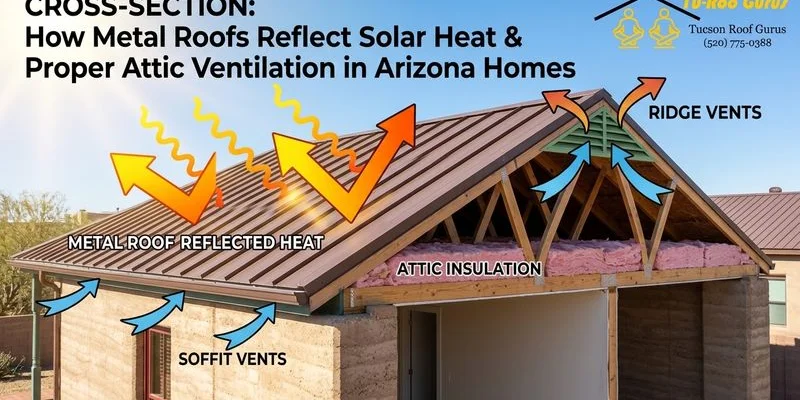
Proper ventilation ensures that any residual warmth moves out of the space before reaching your living areas. We always design these installations as complete thermal systems rather than just simple covers. The exterior surface reflects heat away from the property.
Our crews know that trapped air destroys efficiency.
The Power of Above-Sheathing Ventilation
Creating a small airspace between the panels and the deck allows heat to dissipate quickly. Our installation process incorporates a technique called Above-Sheathing Ventilation. A 2023 study by the Oak Ridge National Laboratory showed this method reduces cooling loads by 45 percent compared to direct-to-deck shingles.
We combine this three-quarter-inch airspace method with ridge and soffit vents to create a continuous flow of air. The dry local climate provides a distinct advantage here. Our approach uses low humidity to allow the air to move freely without complicating the exhaust process.
Radiant Barriers in the High Desert
This highly reflective foil blocks up to 97 percent of radiant heat transfer. Our installers frequently add a radiant barrier directly beneath the decking for an extra layer of protection. A common mistake inexperienced contractors make is blocking the soffit intakes with blown-in insulation.
We carefully verify that all intake and exhaust pathways remain completely clear. This attention to detail guarantees the entire thermal envelope functions at peak performance. Our clients notice their air conditioning runs shorter cycles and consumes far less electricity.
Metal vs. Tile: How Do They Compare on Heat?
Both materials represent a massive upgrade from standard three-tab shingles. Our customers frequently ask us to compare steel panels against traditional clay or concrete tiles. They simply use entirely different physical mechanics to handle the severe afternoon sun.
We break down the differences to help you make an informed choice.
Thermal Mass vs. Rapid Cooling
Heavy concrete relies on thermal mass to absorb and store energy. We explain that this thermal lag delays the heat transfer during the peak afternoon hours. The major downside is that tiles continue radiating that stored warmth into your house until 9 or 10 at night.
Expert Tip: Always consider the nighttime cooling phase. Materials that stay hot after dark force your air conditioner to work overtime long after the sun goes down.
Our temperature readings confirm that steel cools down within minutes of the sun setting. This rapid release gives your air conditioner a much-needed break as soon as evening arrives. We encourage you to check out our comparison of clay vs concrete tile roofing in Tucson.
Weight and Structural Costs
A tile system can weigh up to 900 pounds per roofing square. We must factor in the extreme physical weight of concrete products. This massive load often requires expensive structural reinforcement before installation can even begin.
Our lightweight steel panels weigh a fraction of that amount and install easily over existing structures. The underlayment beneath concrete usually bakes and fails after 20 years. We install high-quality panel systems to avoid this frequent replacement cycle completely.
Common Myths About Metal Roofs and Heat
Misinformation prevents many people from making the best energy choice for their property. We spend a lot of time educating property owners and dispelling outdated rumors. The facts clearly show why these systems dominate the high-end residential market. Our goal is to replace fiction with structural science regarding these three common concerns:
- Interior temperature increases
- Color limitations for efficiency
- Storm noise amplification
Myth 1: Metal Turns Your House Into an Oven
The reflective properties work as a shield rather than a sponge. Our entire business model is built on the fact that these roofs actually lower your indoor temperatures. Think of the material like a high-quality thermos that bounces external heat away while protecting the interior temperature.
We see this protective barrier lower cooling bills immediately.
Myth 2: Only White Roofs Provide Cooling Benefits
The Cool Roof Rating Council proves that modern dark pigments reflect up to 40 percent of solar radiation. We install hundreds of dark bronze and matte black systems that still deliver incredible efficiency. This performance vastly outperforms the mere 20 percent reflectance of standard light-colored asphalt.
Our suppliers utilize advanced pigments to achieve these impressive results.
Myth 3: Rain Noise Will Be Deafening
Solid wood decking and modern synthetic underlayment absorb sound incredibly well. Our sound dampening techniques ensure you will not feel like you are standing inside a tin barn during a monsoon. Acoustic testing shows the decibel difference between steel and asphalt is practically indistinguishable to the human ear.
We guarantee a quiet interior during those heavy summer storms.
The Bottom Line for Tucson Homeowners
Does a metal roof make your house hotter? We want you to feel completely confident in your upgrade decision. The truth for Tucson homeowners is that these systems actually lower temperatures and provide unmatched protection in an extreme desert climate.
Our installations lower your monthly bills and protect your property from ultraviolet damage. High wind ratings keep the panels secure during violent monsoon microbursts. We encourage you to read our complete guide on why metal roofing outperforms in Arizona’s desert climate to see all the advantages.
The Class A fire rating adds essential safety during the dry season.
Ready to Make the Switch?
The right panel profile and coating will transform your property. Our specialists at Tucson Roof Gurus focus exclusively on metal roofing systems designed for this demanding environment.
Smart upgrades provide maximum energy efficiency and lasting performance.
We provide a quick consultation to answer the question: Does a Metal Roof Make Your House Hotter? The Truth for Tucson Homeowners is that these panels are the ultimate shield against the desert sun. We invite you to Contact us today for a free estimate and a straightforward conversation.

Kevin Bayes
Owner, Tucson Roof Gurus
Kevin Bayes has spent over 25 years installing and repairing roofs across southern Arizona. He founded Tucson Roof Gurus to bring honest, owner-operated roofing services to the community.
Free Roofing Estimate
Need help with your roof? Call us for a no-obligation estimate.
(520) 775-0388