Asphalt roofs degrade incredibly fast when exposed to relentless Pima County sun year after year. From what I observe, standard materials simply break down under the thermal stress of back-to-back 110-degree days.
Our team at Tucson Roof Gurus, founded by Kevin Bayes, has spent over 25 years analyzing this exact failure cycle across southern Arizona.
That constant UV bombardment turns flexible shingles into brittle liabilities well before the stated expiration date.
The long-term financial math clearly favors more resilient building materials. Let’s look at the data, what it actually tells us about material performance, and explore the 7 reasons metal roofing outperforms in Arizona.
1. Exceptional Heat Reflection
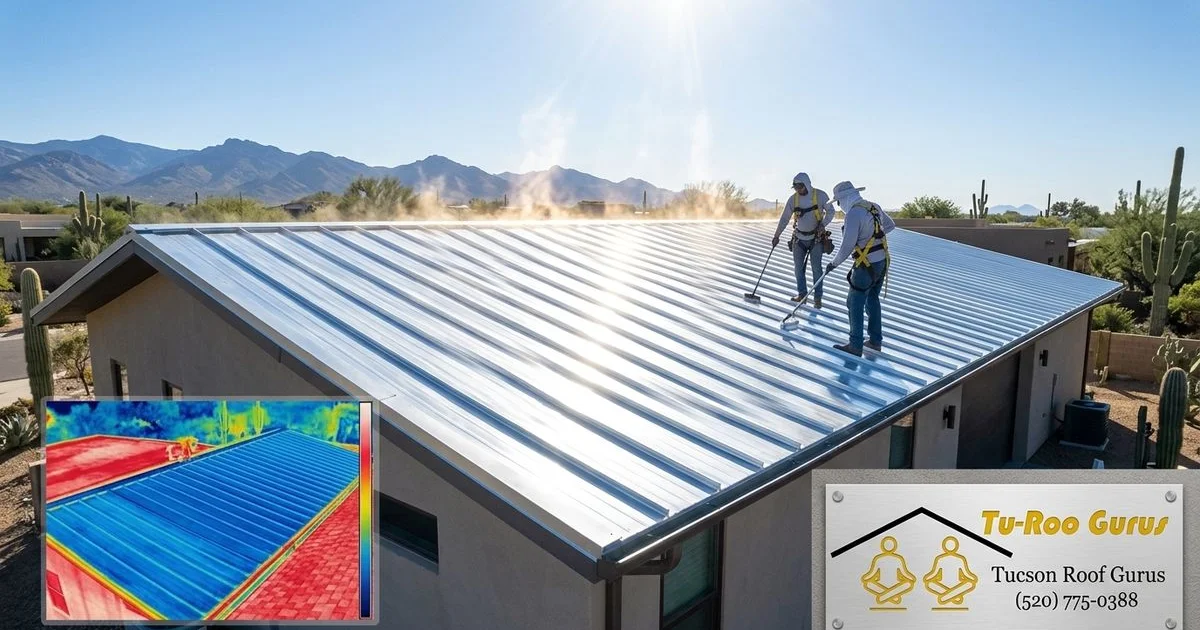
The single biggest challenge for any property in southern Arizona is solar heat gain. An Oak Ridge National Laboratory study found that dark asphalt shingles run 50 to 70 degrees Fahrenheit hotter than the ambient air.
That means on a typical 105-degree Tucson afternoon, your roof surface easily reaches 160 degrees.
Our experience shows this trapped heat radiates directly down into your attic and forces your air conditioning system to work overtime. Reflective metal roofing completely flips this dynamic by acting as a thermal shield.
You can expect several key cooling benefits:
- Reflecting 60% to 80% of the sun’s raw energy back into the atmosphere.
- Dropping attic temperatures by 20 to 30 degrees during peak summer months.
- Generating immediate, measurable reductions in monthly cooling bills.
Tucson experienced 112 days over 100 degrees in 2024, followed by a brutal 112-degree peak in August 2025. Surviving those extremes requires materials certified by the Cool Roof Rating Council (CRRC).
We highly recommend installing light-colored panels that achieve a Solar Reflectance Index (SRI) value of 78 or higher to exceed standard energy codes.
Many customers report noticeable comfort improvements the very first summer after switching to metal. For a deeper look at the science behind this, read our complete analysis on whether metal roofs actually make your house hotter.
2. Superior UV Resistance
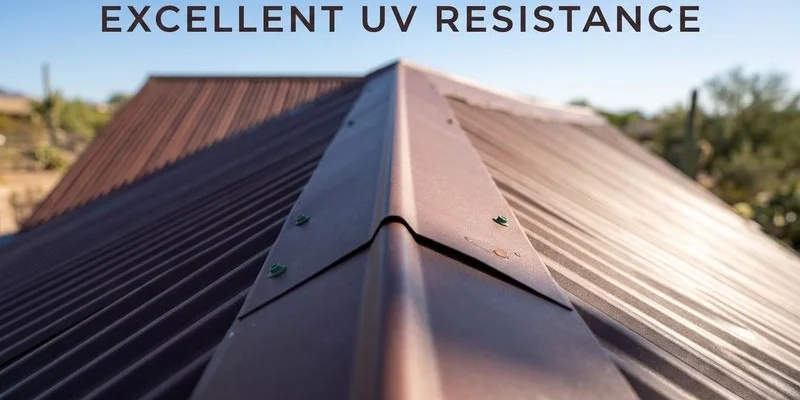
Tucson receives over 300 days of sunshine per year. The resulting UV index routinely hits a “Very High” rating of 8 or above from May through August, breaking down traditional building materials much faster than manufacturers expect.
Asphalt relies on a layer of embedded granules to block ultraviolet rays.
Our inspection crews routinely find that these granules loosen and wash away after just a few monsoons. The exposed asphalt then dries out, leading to roof failure five to ten years earlier than the rated lifespan.
Metal panels bypass this problem entirely by utilizing advanced polymer coatings instead of loose granules.
The Power of PVDF Coatings
The secret to long-lasting color lies in the chemical finish applied to the steel.
We highly recommend specifying a premium mica-based system like Sherwin-Williams Fluropon Continuum. This specific coating features a 70% Polyvinylidene Fluoride (PVDF) resin content.
The carbon-fluorine bonds in a 70% PVDF coating physically cannot absorb ultraviolet energy, giving the material unparalleled resistance to desert sun damage.
A 15-year weathering test showed that these specific PVDF-finished panels maintained 100% of their original film thickness.
This incredible chemical stability prevents the unsightly chalking and fading associated with cheaper Silicone-Modified Polyester (SMP) paints. Your home retains its original curb appeal, and top-tier PVDF coatings now carry 35-to-40-year warranties against color degradation.
3. Outstanding Monsoon Wind Resistance
When monsoon season hits the Sonoran Desert, the accompanying winds cause immediate and widespread property destruction. A prime example occurred during the July 2024 storms, which battered Tucson with severe microbursts and confirmed wind gusts reaching 76 mph.
These sudden downdrafts easily grab the exposed edges of individual asphalt shingles and tear them clean off the decking.
Our repair logs always spike the morning after these intense weather events. Shingle roofs across entire neighborhoods often require emergency tarping before the next afternoon rain hits.
Metal systems utilize a fundamentally different engineering approach to handle extreme uplift forces.
Engineered for Severe Uplift
Modern building codes demand high wind performance. High-quality metal roofs undergo rigorous UL 580 Class 90 Uplift testing to meet strict ASCE 7-22 wind load standards.
We prefer installing standing seam panels because they secure the roof through advanced mechanical connections rather than temporary adhesive strips.
These systems defeat hurricane-force winds by utilizing:
- Concealed floating clips that maintain a permanent grip while allowing for thermal expansion.
- Mechanically seamed joints that create a continuous, wind-proof shield across the entire deck.
- Engineered attachment points rated to withstand sustained wind speeds exceeding 110 miles per hour.
Corrugated profiles fastened with heavy-duty screws also deliver exceptional storm performance. If you want to get ahead of the damage before the clouds gather, check out our guide on preparing your roof for Tucson’s monsoon season.
4. Virtually No Water Absorption
Arizona remains dry for most of the calendar year, but the mid-summer rains arrive in violent torrents. While Tucson averages about 6.06 inches of precipitation during a normal monsoon season, localized storm cells can dump two inches of rain in less than an hour.
Porous materials like concrete tile roofing or aged asphalt absorb a percentage of this sudden moisture.
Our technicians frequently see how this trapped water degrades the underlying structural components over time. The constant cycle of rapid soaking and rapid drying causes conventional materials to swell, warp, and eventually crack.
Metal acts as an absolute, impenetrable barrier to standing water.
Unlike tile systems where the hidden felt underlayment does the heavy lifting, a metal panel serves as the primary, surface-level waterproofing defense against intense monsoon rains.
We value the fact that steel and aluminum shed water immediately upon contact. This zero-absorption quality means your property avoids the hidden rot and mold issues that plague older residential structures.
To maximize this protection, always insist on a high-temperature synthetic underlayment, like Polyglass TU-Max, instead of traditional organic felt. Synthetic materials provide up to 120 pounds of tensile strength and will not degrade if moisture somehow sneaks past the flashing.
5. Lightweight Construction
Tile remains a popular architectural choice in the Southwest, but its massive physical weight creates hidden structural complications. Concrete tiles weigh between 9 and 12 pounds per square foot, while traditional clay tiles average 8 to 10 pounds.
A standard metal panel system weighs a fraction of that amount.
Consider the baseline material weights per square foot:
- Concrete Tile: 9 to 12 pounds
- Clay Tile: 8 to 10 pounds
- Asphalt Shingles: 2 to 4 pounds
- Metal Panels: 1 to 1.5 pounds
Our structural assessments reveal that this drastic weight difference dictates what you can actually install on older properties. Many mid-century homes in Tucson were originally framed specifically for lightweight asphalt loads.
Avoiding Expensive Structural Engineering
Attempting to upgrade an older asphalt roof to heavy tile requires significant engineering modifications.
We regularly see projects halted because local codes require hiring a structural engineer to design retrofits. Adding sister chords, steel gusset plates, and new truss bracing can easily add $3,000 to $5,000 to a baseline remodeling budget.
Metal bypasses this expensive hurdle entirely. You can safely install it on nearly any existing architectural frame without pouring money into structural supports.
This reduced load also minimizes long-term settling stress on your exterior walls and foundation.
6. Fire Resistance
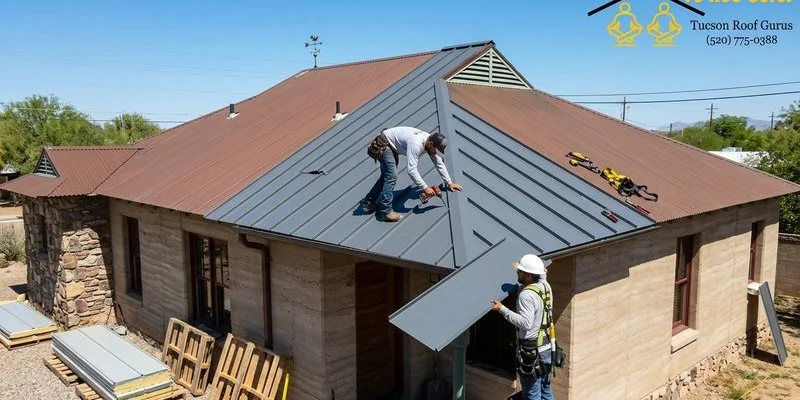
Wildfire risk continues to escalate across the Pima County wildland-urban interface (WUI). Neighborhoods bordering the Catalina and Rincon Mountains face a very real threat from dry brush ignition during the arid pre-monsoon weeks.
The most dangerous element of a wildfire is rarely the advancing flame front itself.
Our fire mitigation research shows that windblown embers cause the vast majority of residential property loss. These burning fragments can travel over a mile ahead of the main fire, easily igniting pine needles trapped in aging shingle valleys.
Metal provides the highest possible level of defense by achieving a strict Class A fire rating under ASTM E108 testing standards.
A Class A fire rating signifies the highest level of resistance against severe exterior fire exposure, confirming the material will not easily ignite or spread flames.
We sleep better knowing our installations pass rigorous safety protocols. During the ASTM E108 test, a Class A roof covering must withstand a burning brand weighing 2,000 grams and prevent flame spread beyond six feet.
The smooth, non-porous metal panels prevent hot embers from finding a place to smolder and breach the attic space. If you live anywhere near the desert edge, this non-combustible shield serves as an essential component of your defensible space strategy.
7. Exceptional Longevity and Low Maintenance
The harsh climatic realities of the Sonoran Desert punish short-term building investments. Standard asphalt shingles rarely achieve their advertised lifespans here, typically requiring a full tear-off every 15 to 20 years.
A properly installed metal system delivers a functional lifespan spanning 40 to 70 years.
Our financial models show that this incredible longevity completely changes the total cost of ownership equation. In 2026, the average cost to replace a standard residential asphalt roof in Tucson ranges from $9,000 to $11,000, roughly $450 to $550 per square.
Over a 50-year period, that asphalt roof requires three complete installations, totaling well over $30,000 in baseline expenses before factoring in inflation.
| Roofing Material | Average Tucson Lifespan | 50-Year Replacement Cycle | Maintenance Requirements |
|---|---|---|---|
| Premium Metal (Standing Seam) | 40 to 70 Years | 1 Installation | Low (Annual visual inspection) |
| Standard Asphalt Shingles | 15 to 20 Years | 3 Installations | High (Granule loss, curling, patching) |
We advise clients to view a metal installation as a one-and-done permanent property upgrade. While the upfront investment is higher, you completely avoid the recurring costs of multiple future replacement cycles.
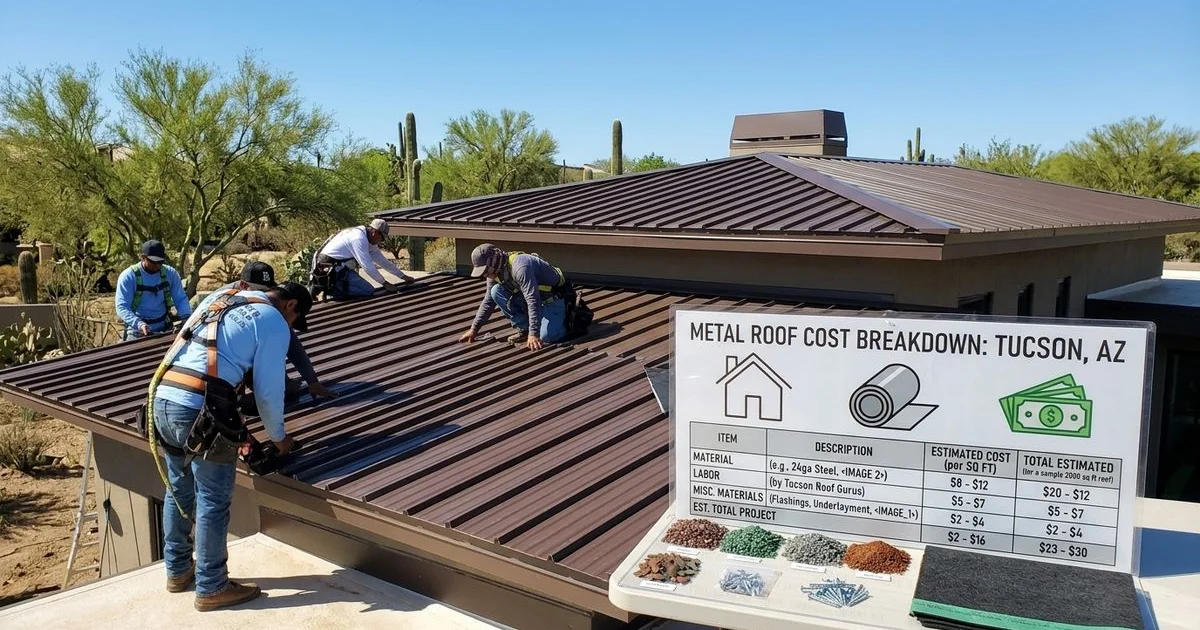
Maintenance remains incredibly simple, usually requiring just an annual visual check of the flashing and sealant joints. For a detailed breakdown of local pricing structures, see our comprehensive guide on metal roofing costs in Tucson.
Choosing the Right Metal Roof for Your Arizona Home
The specific panel profile and material gauge dictate how well your new upgrade will perform. You cannot simply order the cheapest panels and expect premium architectural results.
Our fabrication specialists note that metal thickness plays a critical role in preventing heat distortion. Thicker materials like 24-gauge steel successfully resist “oil canning”, an unsightly waviness caused by rapid thermal expansion.
Key Design Distinctions
When evaluating panel systems, keep these structural specifications in mind:
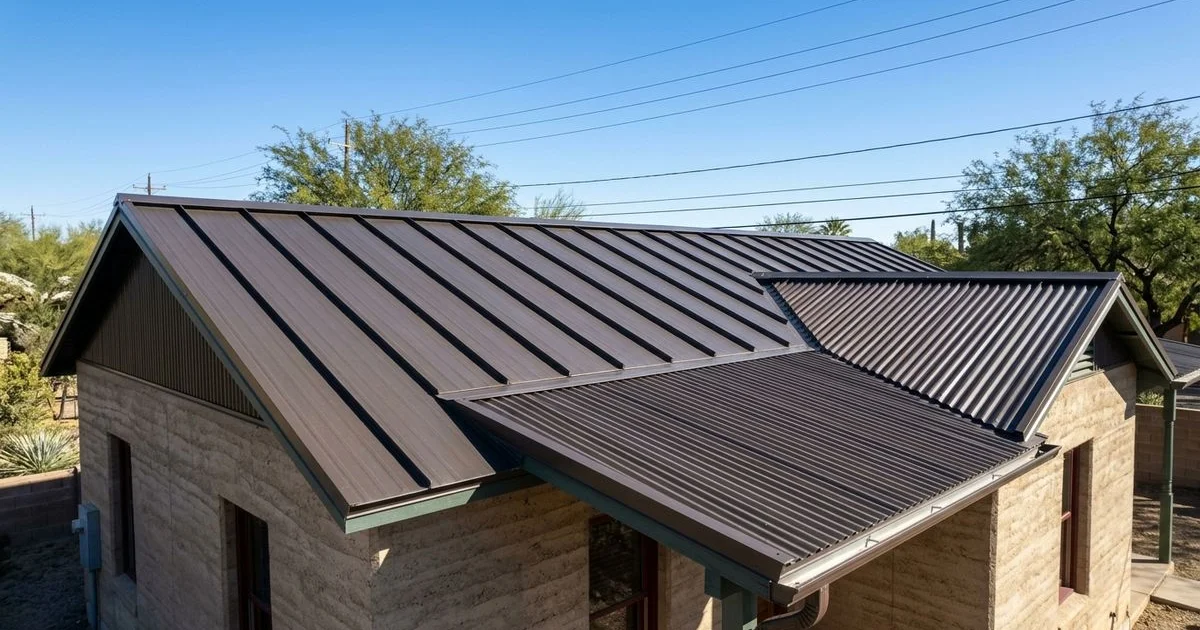
- Standing Seam: Utilizes concealed fasteners and mechanically seamed joints to completely eliminate exposed screw holes and prevent future leaks.
- Corrugated Profiles: Features exposed fasteners but provides an excellent, budget-friendly alternative if installed with UV-resistant neoprene washers.
- Gauge Selection: Requires a heavier 24-gauge steel rather than thinner 26-gauge stock to maintain structural rigidity under intense midday sun.
- Panel Striations: Adding subtle ridges, known as striations, down the flat pan of the metal panel breaks up the surface glare and further masks any minor thermal warping.
We always recommend hidden fastener systems for the ultimate long-term weather protection. You can read a detailed structural comparison in our article on standing seam vs corrugated metal roofing.
Talk to a Tucson Metal Roofing Expert
The extreme climate of the Sonoran Desert requires building solutions engineered for absolute resilience. After reviewing the data on heat reflection, wind resistance, and longevity, the 7 reasons metal roofing outperforms in Arizona become impossible to ignore.
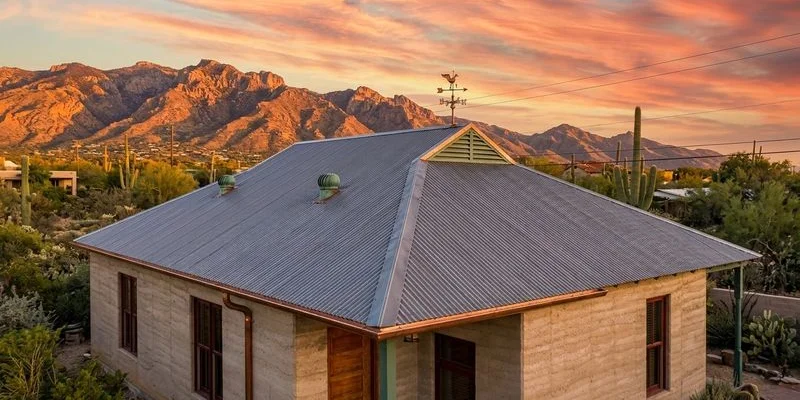
Our installation crews at Tucson Roof Gurus handle everything from historic Sam Hughes bungalows to modern Foothills estates.
Local experience dictates exactly which panel profiles and Kynar 500 finishes stand up to our unique conditions. We ensure every project receives the precise attention to detail necessary to survive decades of intense solar exposure.
Ready to Upgrade Your Desert Home?
Protecting your property starts with a professional assessment of your current structure. If you are ready to upgrade your property defense, reach out for a free consultation.
We provide straightforward, data-backed advice matched to your specific budget and long-term goals.

Kevin Bayes
Owner, Tucson Roof Gurus
Kevin Bayes has spent over 25 years installing and repairing roofs across southern Arizona. He founded Tucson Roof Gurus to bring honest, owner-operated roofing services to the community.
Free Roofing Estimate
Need help with your roof? Call us for a no-obligation estimate.
(520) 775-0388